The working principle of switch power supplies

Switch power supplies are important parts of modern electronics, operating on a specific working principle that allows them to change electrical power in a smart way. This helps devices work better and more efficiently. These supplies utilize new technology to save energy, often achieving over 90% efficiency. This is crucial because it reduces waste and enhances performance. The global market for switch power supplies is expected to grow significantly, rising from $34.2 billion in 2024 to $48.1 billion by 2030. This growth underscores their importance across various applications.
Initial Operation Stages
Rectification
The first step in how switch power supplies work is called rectification. This step changes alternating current (AC) into direct current (DC). You do this with diodes. Diodes let current flow in only one direction. Here are the main steps in rectification:
AC Input: The power supply gets AC voltage from the mains.
Diode Action: Diodes allow current to flow during the positive half-cycle of the AC wave. They block the current during the negative half-cycle.
Pulsating DC Output: This creates a pulsating DC voltage that still has some changes.
Different types of rectifiers can make this process more efficient. Below is a table that shows common rectifier types:
Rectifier Type | Description | Typical Applications | Advantages | Disadvantages |
|---|---|---|---|---|
Half-Wave Rectifier | Changes AC to DC using one diode. | Power supply for low-power devices. | Simple and low cost. | Not very efficient and high ripple voltage. |
Full-Wave Rectifier | Uses two or four diodes to change AC to DC. | More efficient power supplies and battery chargers. | Lower ripple voltage and better efficiency. | More complex circuit design. |
Bridge Rectifier | Four diodes set up in a bridge shape. | Commonly used in power supply circuits. | Compact design and good rectification. | Needs more diodes and slightly raises voltage drop. |
Controlled Rectifier (Thyristor) | Lets you control the output current by triggering. | Used in industrial tasks like motor speed control. | Good control over power output. | Needs complex control circuits. |
Fast Recovery Rectifier | Made for high-speed switching tasks. | Used in switch-mode power supplies and rectifier circuits. | Faster switching cuts energy losses. | Can cost more than regular rectifiers. |
Filtering
After rectification, the next important step is filtering. This step smooths the pulsating DC voltage to lessen changes. Capacitors are very important here. They store and release electrical energy to keep a steady and stable DC output. Here are some key points about filtering:
Capacitors help fill in voltage drops during the lower parts of the DC output.
They help create a clean and ripple-free DC output.
Adding more capacitance or capacitors in parallel can lower ripple voltage well.
The quality of the DC output relies a lot on the filtering process. Ripple is the regular change left on the DC voltage. It can cause problems in sensitive applications. For example, in audio systems, poor filtering can create noise. So, good filtering methods are key for keeping a steady voltage and ensuring reliable operation.
Working Principle of High-Frequency Switching
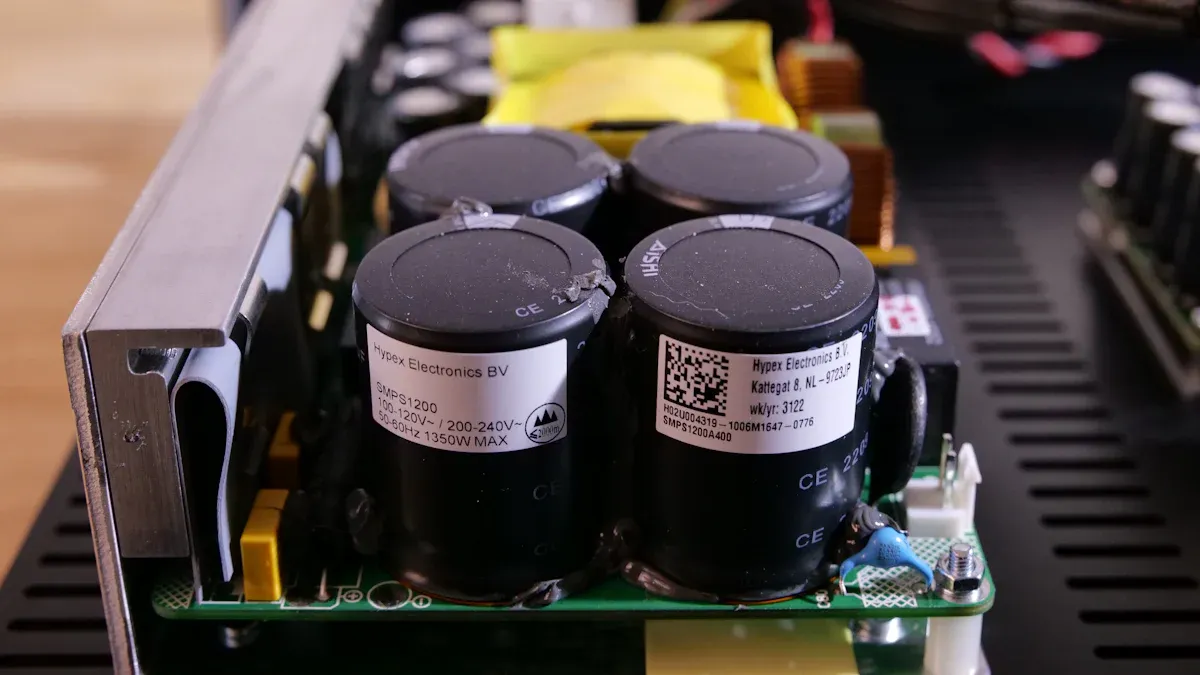
Switching Mechanism
The switching mechanism is very important for how well switch power supplies work. It quickly turns the power on and off. This helps change energy effectively. Here’s how it works:
High-Frequency Operation: Switch power supplies usually work at frequencies from 20 kHz to over 1 MHz. This high frequency means smaller parts, which makes the power supply smaller.
Frequency Range
Size Reduction
20 kHz
Quarter the size
100-200 kHz
One eighth the size
200 kHz - 1 MHz
Even smaller
Energy Efficiency: The switching mechanism cuts down losses when switching happens. Methods like quasi-resonant switching let the switch turn on and off with no current and voltage. This means almost no energy is lost. Also, switching at low voltage cuts down electromagnetic interference (EMI), making the system better.
Benefits of High-Frequency Switching: This mechanism gives you many benefits:
Smaller and lighter parts.
Better energy efficiency.
Less EMI, which helps performance in sensitive devices.
Control Techniques
Control techniques are key for keeping stability and performance in switch power supplies. The most common method is Pulse Width Modulation (PWM). Here’s how it works:
PWM Basics: PWM changes the pulse width of the AC signal to control electrical energy and output voltage. This method helps keep the output voltage steady.
Efficiency of PWM: PWM is more efficient than linear power supplies. Linear supplies waste energy as heat, while PWM uses energy better.
Optimizing PWM Settings: Good PWM settings can really improve power quality. They lower ripple and help with quick changes. Here are some important points:
Change the duty cycle to lower switching losses while keeping output steady.
Use soft switching methods like zero-voltage switching (ZVS) to cut down EMI and energy loss.
Keep feedback loops stable to react quickly to load changes without causing problems.
By knowing these control techniques, you can make sure everything works well in different situations.
Transformer Functions in Power Supply
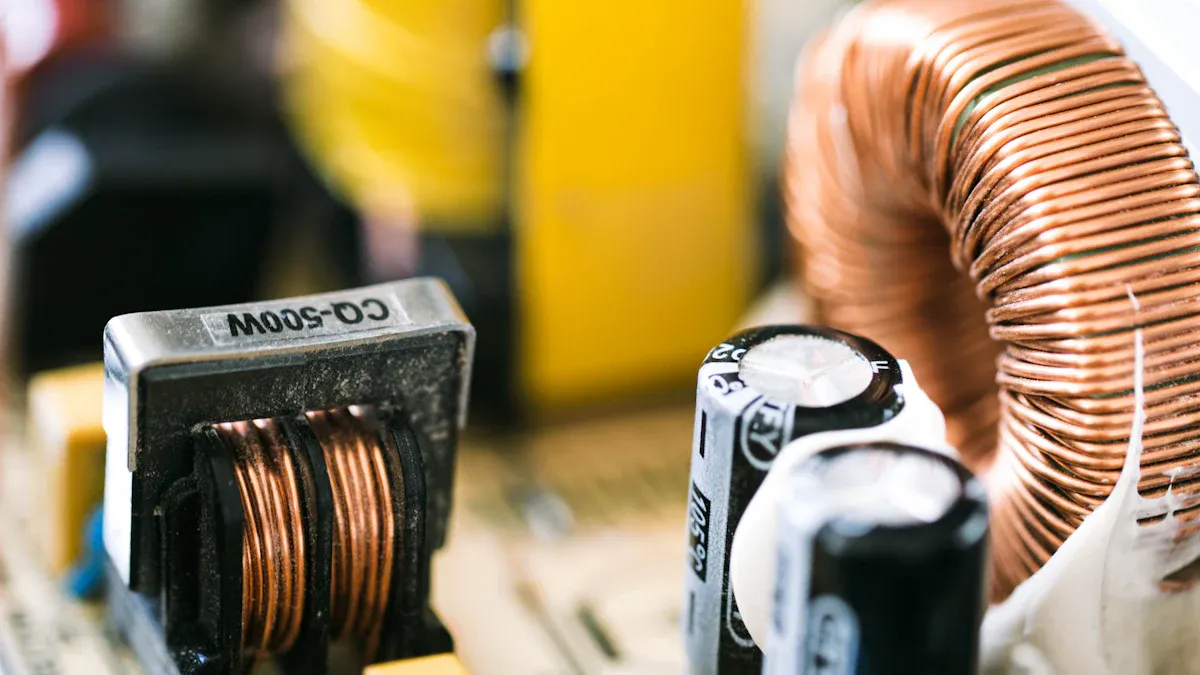
Isolation
Transformers are very important for providing safety in switch power supplies. They keep the incoming power supply separate from the device that uses it. This separation helps safely ground the metal parts of the enclosure. You can think of it as a shield that lowers the chance of electric shock.
Transformers in switched-mode power supplies keep the incoming power supply apart from the powered device. This allows for safe grounding of the metal parts. This safety feature is very important because it lowers the risk of electric shock.
Also, transformers help cut down electrical noise. High-frequency switching in switch-mode power supplies (SMPS) can create unwanted electromagnetic interference (EMI). To handle this interference, you can use different methods:
Transformers can help lower some electrical noise in switched power supplies.
Other methods like EMI filters and RF shielding are needed to effectively reduce interference.
Voltage Transformation
Voltage transformation is another key job of transformers in switch power supplies. This process lets you increase or decrease voltage, which helps the grid work better. It also makes sure electricity is delivered safely.
Here are some important points about voltage transformation:
Higher voltage means less current flow, which cuts down power losses.
Step-up transformers are important for sending power over long distances.
Voltage transformation helps deliver power in a cost-effective way, improving overall system efficiency.
By changing voltage, transformers help lower energy losses during transmission. This is very important for keeping high efficiency in switch power supplies. You can see how these functions help the overall working principle of switch power supplies, making them effective and reliable.
Output Processing Techniques
Regulation
Regulation is very important for keeping a steady output in switch power supplies. You want to make sure your devices get the same voltage, even when the load changes. The main way to do this is with Pulse Width Modulation (PWM). This method changes how long the current is switched on and off to keep the output voltage steady. By changing the widths of the pulses, PWM helps balance the area of each pulse, which is key for stabilizing voltage.
Here are some important points about regulation methods:
PWM works better than linear power supplies. It reduces power loss while stabilizing.
PFM (Pulse Frequency Modulation) is another option, but PWM usually gives better efficiency and faster response.
Constant on-time valley current mode control reacts quicker to load changes than constant voltage mode control.
Filtering and Smoothing
After regulation, filtering and smoothing methods help reduce output ripple. Ripple can make things unstable in sensitive applications, so you need good ways to lower it. Here are some common techniques:
Sufficient Capacitance: Big filter capacitors act like energy storage. They smooth the DC voltage and help cut down ripple.
LC and Pi Filters: Inductor-capacitor (LC) or Pi-type (CLC) filter networks further smooth the voltage and lessen ripple.
Voltage Regulators: These devices keep a steady output voltage and can greatly lower ripple by redirecting voltage at the ripple frequency away from the load.
The success of these filtering methods can differ. Here’s a quick overview:
Description | |
|---|---|
Large Filter Capacitors | Act as energy storage, smoothing DC voltage and reducing ripple. |
LC Filters | Inductor-capacitor networks that resist changes in current, further smoothing voltage and lowering ripple. |
Advanced Filtering | Multi-stage filters, including common-mode chokes and LC filters, block noise at both input and output. |
By using these techniques, you can get a low-noise output, making sure your electronic devices work reliably.
Types of Switch Power Supplies
Switch power supplies come in different types. Each type has its own special job. Knowing these types helps you pick the right one for what you need.
Buck Converter
A buck converter lowers voltage. It takes a higher input voltage and changes it to a lower output voltage. This type is great when you need less voltage than you have. For example, if you want to power a device that needs 5V from a 12V source, a buck converter works well.
Applications: Commonly used in battery-powered devices and LED drivers.
Advantages: High efficiency and small size.
Boost Converter
On the other hand, a boost converter raises voltage. It takes a lower input voltage and increases it to a higher output voltage. This type is helpful in places like battery chargers and photo-flashes, where you need more voltage than the battery gives.
Applications: Often found in portable electronics and renewable energy systems.
Advantages: Gives flexibility in voltage needs.
Buck-Boost Converter
The buck-boost converter combines both buck and boost functions. It can either raise or lower voltage, making it useful for many applications. This type is especially good when the input voltage changes a lot.
Applications: Ideal for systems that need stable output with changing input conditions.
Advantages: Offers flexibility and steady output voltage.
Here’s a quick comparison of these converters:
Converter Type | Functionality | Output Voltage Behavior |
|---|---|---|
Buck Converter | Lowers voltage | Step-down output voltage |
Boost Converter | Raises voltage | Step-up output voltage |
Buck-Boost Converter | Can either raise or lower voltage | Inverted output voltage, can be more or less than input voltage |
By knowing these types of converters, you can choose the right one for your needs. Each type is important in how switch power supplies work, helping manage power efficiently in many uses.
Advantages and Disadvantages
Efficiency
Switch power supplies (SMPS) have many efficiency benefits when compared to older linear power supplies. You can expect SMPS to work at over 90% efficiency. This high efficiency makes them great for devices that use a lot of energy. Here are some main advantages:
High Efficiency: SMPS can reach efficiencies over 90%, which is great for power-hungry devices.
Compact Design: Smaller parts and high-frequency transformers help save space in devices like smartphones.
Wide Input Voltage Range: SMPS can handle different input voltages, making them useful in many industries.
Evidence Type | Description |
|---|---|
Efficiency Levels | New DC-DC power units can reach efficiencies as high as 90%, while older models were between 80% and 85%. |
Higher Switching Frequencies | New technology lets power supplies run at higher frequencies, which makes magnetic parts smaller and improves efficiency. |
Synchronous Rectification | This method cuts down losses and boosts efficiency, especially with high currents, making it common in modern designs. |
Complexity
Even though SMPS have many benefits, they also come with some complexity. The advanced technology in these power supplies can make them hard to design and use. Here are some reasons for this complexity:
EMI Concerns: High-frequency operation creates electromagnetic interference, needing extra filtering parts.
Complex Design: Advanced circuits and semiconductor parts raise manufacturing costs and make repairs harder.
Noise Levels: Electrical noise from SMPS can limit their use in sensitive analog settings.
You should think about how this complexity affects maintenance and reliability. Complex systems need clear labeling and easy procedures to help maintenance workers. In bigger facilities, the complicated layout of main switchgear can confuse staff, especially in emergencies. Accurate and updated one-line diagrams are very important for daily maintenance and troubleshooting.
By looking at these advantages and disadvantages, you can better understand how switch power supplies work and their role in modern electronics.
Real-World Applications
Consumer Electronics
Switch power supplies are very important in consumer electronics. You see them in many devices you use every day. Here are some common uses:
AC-DC Converters: These converters change alternating current (AC) from the wall into direct current (DC) for laptops and mobile phones.
DC-DC Converters: These are key in smartphones and tablets. They adjust voltage levels to power different parts efficiently.
Electronic Transformers: You find these in lighting systems. They help change voltage for low-voltage lighting needs.
Application Type | Description |
|---|---|
Extra-low-voltage source | Used for lighting, often called 'electronic transformers'. |
DC-to-DC conversion | Used in heavy vehicles to change 24 VDC to 12 V for accessories, ensuring even load sharing. |
AC-DC conversion | Common in power adapters and chargers for laptops and mobile phones, changing AC to DC. |
DC-DC conversion | Important in battery-powered devices like smartphones and tablets for different voltage needs. |
Industrial Equipment
In factories, switch power supplies help save energy. They can be more than 92% efficient, which is much better than older linear power supplies. This efficiency comes from smart circuits that reduce power loss and heat.
Switch mode power supplies work by quickly turning the input voltage on and off. This method helps control voltage well, cutting down energy waste and lowering costs. By using pulse width modulation (PWM), these supplies manage power levels effectively. This process saves energy and helps the environment.
Also, reducing heat helps equipment last longer. This means less need for extra cooling systems, making everything work better. You can see how switch power supplies are important in both consumer electronics and industrial uses, showing their working principle in action.
In conclusion, knowing how switch power supplies work is important for anyone in electronics. These devices change power efficiently, control voltage, and reduce noise, making them crucial for many uses. Here are some key points:
Key Aspect | Description |
|---|---|
Switching Regulators | Used to keep and control output voltage by managing load current. |
AC to DC Conversion | The first step involves changing and filtering AC power to make it DC. |
High-Frequency Operation | The DC signal is handled by a high-frequency switch to create a medium-frequency pulsating DC signal. |
Power Transformer | Lowers high-voltage DC output to the needed level of DC signal. |
Feedback Mechanism | Control circuits always check and adjust the high-frequency switch to keep output voltage steady. |
Types of SMPS | Includes AC-DC converters, DC-DC converters, fly-back converters, and forward converters. |
By learning these ideas, you can improve your projects. You will get better voltage control, less noise, and safer features. Understanding these concepts will help you make more efficient and reliable electronic designs.
See Also
Decoding The Functionality Of AC To DC Converters
An Overview Of Power Supply Chips And Their Operation
Investigating The Key Features Of Low Power Switcher ICs
Utilizing Schottky Barrier Rectifiers In Electronic Circuits