Understanding how diodes function in circuits
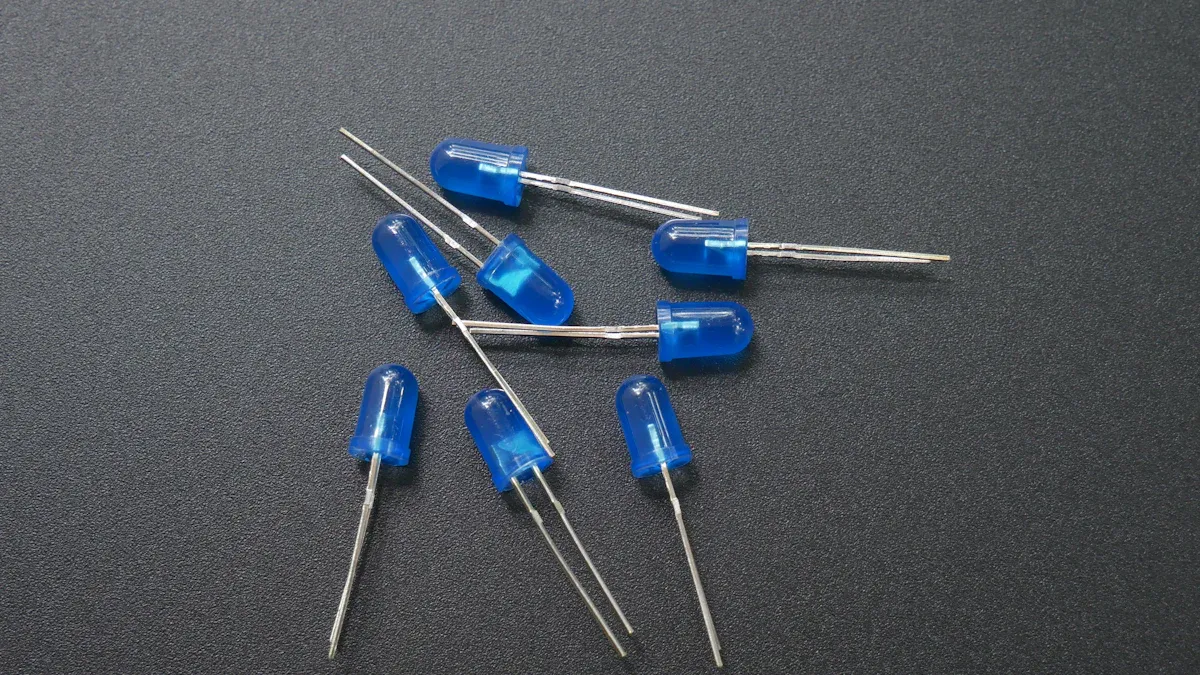
A diode, a type of diodes, is a fundamental electronic component that allows electrical current to flow in one direction while blocking it in the opposite direction. This unidirectional flow is crucial for protecting electronic devices from potential damage caused by reverse current. When you apply a forward bias to a diode, it conducts electricity. In contrast, when it is in reverse bias, the diode acts as an insulator, preventing current flow. Understanding how diodes work helps you grasp essential concepts in electronics and enhances your ability to design and troubleshoot circuits effectively.
Key Takeaways
Diodes allow current to flow in one direction, making them essential for converting AC to DC.
Understanding diode bias states helps in designing circuits and troubleshooting issues effectively.
Different types of diodes, like Zener and Schottky, serve unique functions and improve circuit performance.
Diodes protect sensitive components by blocking reverse current, ensuring circuit reliability.
Advancements in diode technology enhance efficiency and functionality in modern electronics.
Diode Structure
Anode and Cathode
A diode has two important terminals: the anode and the cathode. The anode connects to the p-type semiconductor, while the cathode connects to the n-type semiconductor. This arrangement creates a pn junction. When you apply a forward bias, current flows from the anode to the cathode. Here’s how it works:
In a forward-biased diode, current flows from the anode to the cathode.
Electrons move from the cathode to the anode through the external circuit.
In reverse bias, the cathode attracts electrons, preventing current flow.
This unique configuration allows diodes to perform rectification, which is essential in many electronic applications.
Semiconductor Materials
Diodes use specific semiconductor materials to function effectively. The most common materials are silicon and silicon carbide. Each material has unique properties that affect diode performance. Here’s a comparison of these two materials:
Characteristic | Silicon (Si) | Silicon Carbide (SiC) |
|---|---|---|
Reverse Breakdown Voltage (VR or VBR) | ≤200 V | 650-1700 V |
Forward Voltage Drop (VF) | 0.3-0.7 V | 1.0-1.8 V |
Reverse Leakage Current (IR) | Highest, increases significantly at high temperatures | Low, minimal increase at high temperatures |
Reverse Recovery Time (trr) | Very short (few ns) | Extremely short (~few ns) |
Switching Loss | Low | Very low |
Operating Temperature | Up to ~150°C | Up to ~200°C |
Application Range | Low-voltage power supplies, RF applications | High-voltage, high-efficiency applications (EVs, industrial power, renewable energy) |
Understanding these materials helps you appreciate how advancements in semiconductor technology improve diode efficiency. For example, Schottky diodes reduce forward conduction voltage, leading to less energy loss. This knowledge is crucial for anyone interested in electronics.
Diode Bias States
Forward Bias
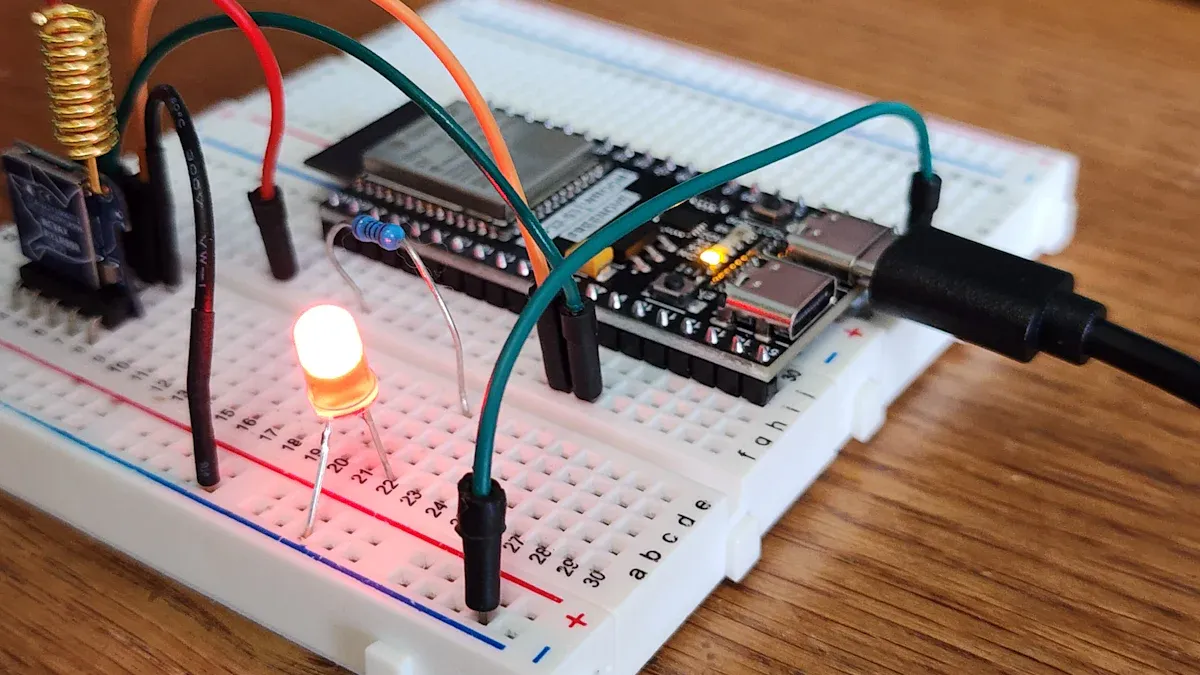
When you apply a forward bias to a diode, it allows current to flow freely from the anode to the cathode. This condition is essential for many electronic applications. Here’s how it works:
The typical voltage threshold required for a diode to conduct in forward bias is around 0.6 V for silicon diodes.
Once you exceed this threshold, the diode enters a conductive state.
The relationship between voltage and current in a forward-biased diode is not linear. Instead, it follows the Shockley diode equation, which shows that current increases rapidly once you surpass the threshold voltage. Here are some key points about forward bias:
Current flows from the anode to the cathode.
The voltage drop across the diode remains relatively constant, even with significant changes in current.
Forward-biased diodes are crucial in rectifier circuits, converting alternating current (AC) to direct current (DC).
Reverse Bias
In contrast, when you apply a reverse bias to a diode, it acts as an insulator. This means that current cannot flow from the cathode to the anode. Instead, the diode only allows a tiny leakage current to pass through, which is primarily due to minority charge carriers. Here’s what happens under reverse bias:
The leakage current remains minimal until the reverse voltage exceeds the thermal voltage.
Once you reach the breakdown voltage, the current increases sharply with minimal voltage change. This behavior is critical for understanding how diodes operate in reverse bias.
The reverse bias condition is essential for protecting circuits from unwanted current flow. It ensures that diodes can block reverse currents, safeguarding sensitive components. Understanding these bias states helps you design circuits effectively and troubleshoot issues that may arise.
Rectification with Diodes
AC to DC Conversion
Rectification is the process of converting alternating current (AC) into direct current (DC). This process is essential in many electronic devices, as most of them require a stable DC power supply. Here’s how diodes play a crucial role in this conversion:
Understanding AC and DC: AC current periodically reverses direction, while DC flows in one direction only.
Role of a Diode in Conversion: A diode allows current to flow in one direction, passing only the forward half of the AC waveform.
Half-Wave Rectification Process: The diode conducts during positive half-cycles and blocks during negative half-cycles, resulting in pulsating DC.
Full-Wave Rectification Process: A bridge rectifier uses four diodes to convert both halves of the AC waveform into pulsating DC.
Smoothing the Rectified Output: Capacitors are used to smooth the pulsating DC, resulting in a more constant voltage.
This process ensures that you receive a steady power supply, which is vital for the proper functioning of electronic devices.
Importance in Power Supply
Diodes are fundamental in power supply applications for several reasons:
Efficient rectification and voltage stabilization: Diodes convert AC to DC, providing stable power and protecting circuits from voltage fluctuations.
Signal amplification and switching: They amplify weak signals and serve as switching elements in digital circuits, enhancing functionality.
Low power consumption and long lifespan: Diodes consume less energy and have a long operational life, improving reliability and reducing maintenance costs.
Small size and light weight: Their compactness makes them ideal for portable devices, contributing to miniaturization in electronics.
Low cost and easy accessibility: Diodes are cost-effective and widely available, making them a fundamental component in various electronic devices.
The efficiency of rectification can vary between different diode types. For example, here’s a comparison of rectification methods and their efficiencies:
Rectification Method | Efficiency (%) | Improvement (%) |
|---|---|---|
Secondary-side Diode | 77.3 | N/A |
Synchronous Rectification (Low-side) | 81.3 | 4 |
Synchronous Rectification (High-side) | 81.6 | N/A |
Understanding these aspects of diodes helps you appreciate their significance in modern electronics. By utilizing diodes effectively, you can design circuits that are not only efficient but also reliable.
Types of Diodes and Applications
Standard Diodes
Standard diodes, also known as rectifier diodes, play a vital role in converting alternating current (AC) to direct current (DC). You often find them in power supplies, such as laptop chargers. These diodes allow current to flow in one direction, effectively blocking the reverse current. Here’s a quick overview of their features:
Type of Diode | Distinguishing Features |
|---|---|
Rectifier Diodes | Convert AC to DC, used in power supplies (e.g., laptop chargers). |
Zener Diodes
Zener diodes are unique because they can regulate voltage. They allow reverse current to flow at a specific voltage, making them essential for maintaining stable voltage levels in circuits. You can find Zener diodes in various applications, including:
Shunt regulators
Regulated power supply circuits
These diodes enhance circuit stability by shunting excess current, which protects sensitive components from voltage spikes.
Schottky Diodes
Schottky diodes are known for their fast switching capabilities. They have a low forward voltage drop, which allows them to operate efficiently at high speeds. This feature makes them ideal for applications in computer processors and other high-speed circuits. Schottky diodes improve switching speed due to their significantly lower reverse recovery time compared to traditional p-n junction diodes. They can switch as fast as ~100 picoseconds, allowing for nearly instantaneous transitions. This capability enables circuits to operate efficiently at frequencies ranging from 200 kHz to 2 MHz.
In summary, diodes play a crucial role in modern electronic circuits. They regulate current flow, ensuring efficiency and functionality. Here are some key points to remember:
Diodes allow current to flow in one direction, essential for rectification.
They prevent reverse current, protecting sensitive components.
Different types of diodes, like Zener and Schottky, serve unique functions in various applications.
As you explore electronics further, consider how advancements in diode technology continue to shape the industry. Understanding diodes enhances your ability to design and troubleshoot circuits effectively.
FAQ
What is the main function of a diode?
Diodes allow current to flow in one direction while blocking it in the opposite direction. This unidirectional flow protects circuits from reverse current.
How do I know if a diode is working?
You can test a diode using a multimeter. Set it to the diode setting, connect the leads, and check for a reading. A good diode shows low resistance in one direction and high resistance in the other.
What happens if I connect a diode in reverse?
If you connect a diode in reverse, it will block current flow. This can protect your circuit from damage caused by reverse polarity.
Can diodes handle high voltages?
Yes, some diodes, like Zener and Schottky diodes, can handle high voltages. Always check the specifications to ensure the diode suits your application.
Where are diodes commonly used?
You find diodes in power supplies, signal processing, and voltage regulation circuits. They are essential in devices like chargers, radios, and computers.
See Also
Exploring The Applications And Functions Of Photodiode ICs
The Importance Of Integrated Circuits In Today's Electronics
Utilizing Schottky Barrier Rectifiers In Electrical Circuits