TPS259823ONRGET eFuse: Your Power Protection Solution?
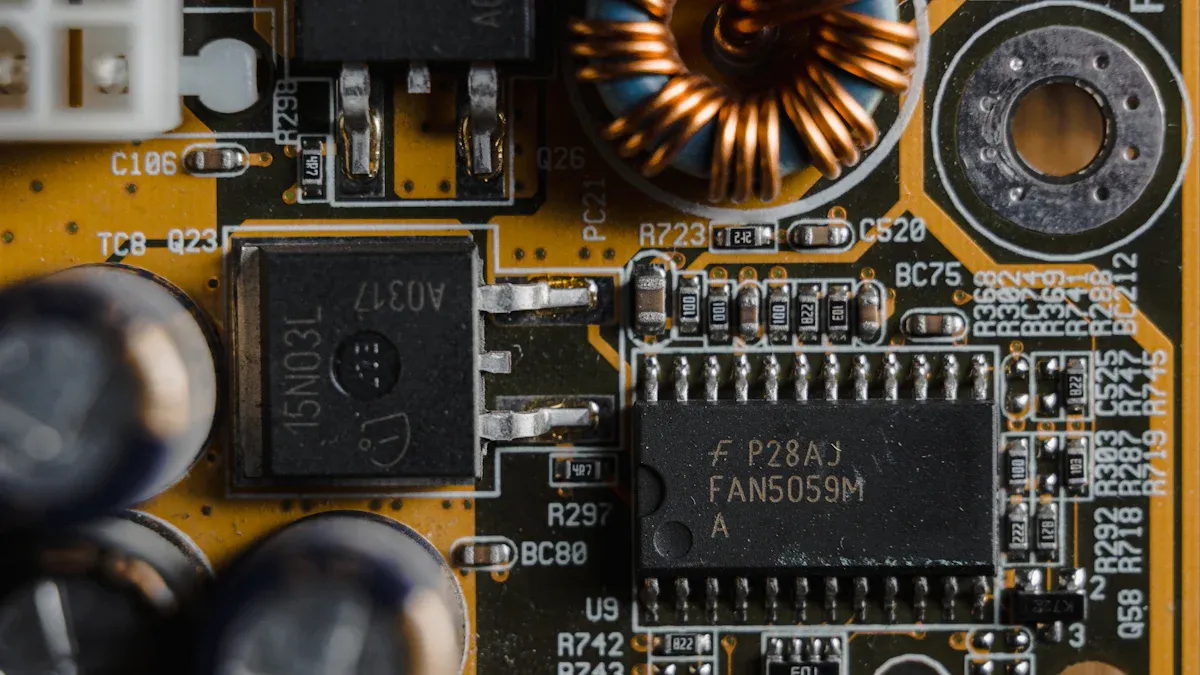
An electronic fuse, or eFuse, is an integrated circuit. It protects electronic systems from overcurrent, overvoltage, and short-circuit conditions. Texas Instruments offers an advanced electronic fuse, the TPS259823ONRGET. This device provides robust, resettable power protection and management. It offers significant advantages over traditional fuses. The global eFuse market is projected to grow at a compound annual growth rate (CAGR) of 6.8% from 2025 to 2033. This growth highlights their increasing importance. This technology enhances system reliability. It extends longevity and minimizes downtime.
Key Takeaways
The TPS259823ONRGET eFuse protects electronics from too much current or voltage. It works better than old-style fuses.
This eFuse can reset itself after a problem. This means less downtime for your electronic systems.
It allows you to plug in or unplug parts without turning off the whole system. This is called hot-swap protection.
The eFuse helps make electronic designs simpler. It also saves space on circuit boards and lowers costs.
It tells you when something is wrong. This helps fix problems faster and keeps systems running smoothly.
Understanding the TPS259823ONRGET eFuse
What is an Electronic Fuse (eFuse)?
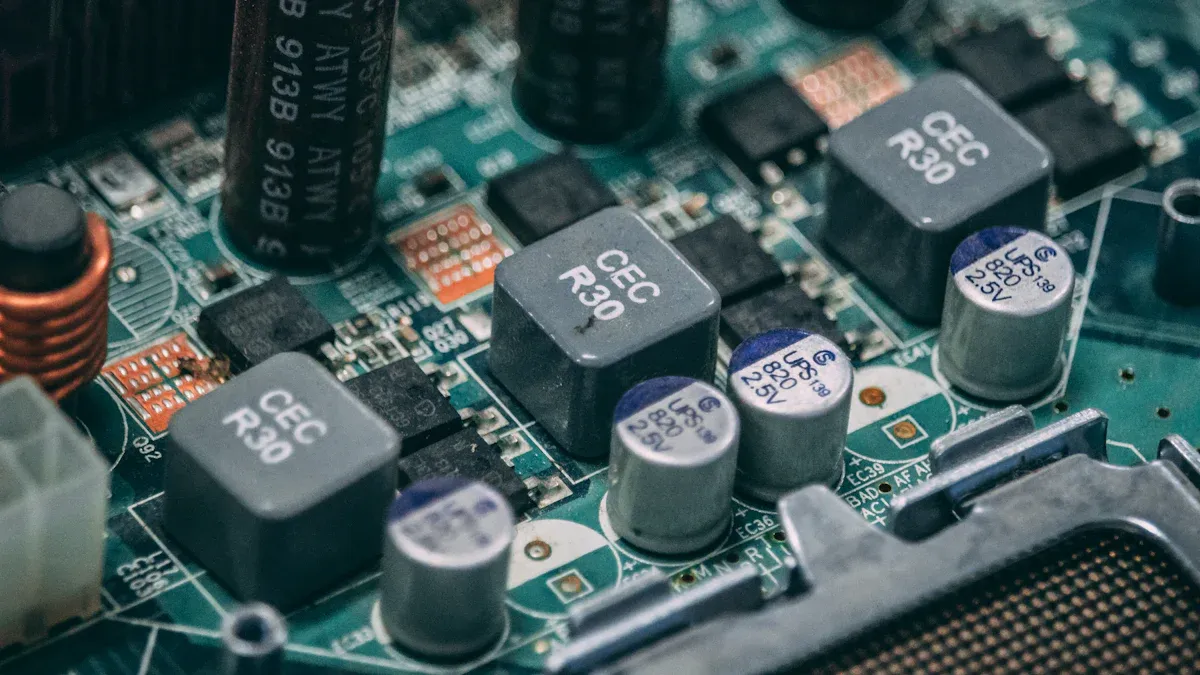
An electronic fuse, or eFuse, represents a significant advancement in circuit protection technology. Unlike traditional fuses, which are simple, passive components, an eFuse is an integrated circuit. It actively monitors and controls the power flowing through a circuit. A fuse is installed in series with the circuit it protects. It acts as a passive device to safeguard against excessive current or short circuits. When an abnormal condition, such as a short circuit or significant current increase, occurs, the fuse element in a traditional fuse melts. This melting opens the circuit. It prevents large currents from flowing and damaging components. An eFuse performs this same protective function but does so electronically and with greater sophistication.
Core Function and Purpose
The primary purpose of an eFuse is to provide dynamic and intelligent power protection. It continuously monitors voltage and current levels. If it detects a fault condition, such as an overcurrent, overvoltage, or short circuit, the eFuse quickly isolates the faulty section. This prevents damage to sensitive downstream components. This active management ensures the system operates within safe parameters. Traditional fuses offer a one-time protection. Once they blow, they require manual replacement. eFuses, however, can often reset themselves or be reset electronically. This capability significantly reduces system downtime. Different types of fuses exist for various needs. Time-lagging (slow blow) fuses have a deliberate delay before their element melts. They are ideal for circuits with high inrush currents, such as capacitive circuits like switching converters and power supplies. Fast-acting (fast blow) fuses open immediately upon a significant current surge. They are crucial for critical designs that demand rapid protection. These often have a small I2t rating and suit sensitive circuits. eFuses can emulate or surpass these behaviors with programmable precision.
Fuses are characterized by specific ratings. The current rating specifies the maximum continuous current a fuse can carry under normal conditions, typically at 25ºC ambient temperature. Engineers recommend that the circuit's typical current should not exceed 75% of this rating. The I2t rating (melting current) is another important parameter. This parameter is designed for transient conditions, such as the high inrush currents experienced during the startup of circuits with large capacitances. It represents the energy required to melt the fuse element. This ensures protection during temporary current spikes that exceed the steady-state current rating. The TPS259823ONRGET eFuse manages these parameters electronically, offering superior control.
Advantages Over Traditional Fuses
eFuses offer several key advantages over their traditional counterparts. These benefits make them a preferred choice for modern electronic designs.
Resettable Functionality: eFuses offer automatic or electronic resetting after an overcurrent event. This eliminates the need for manual replacement required by conventional fuses. This feature reduces downtime and improves system availability.
Precision and Accuracy: eFuses provide precise and accurate current limiting with customizable thresholds. This ensures optimal circuit protection. This level of precision is not achievable with the fixed current ratings of conventional fuses.
Enhanced Control: An eFuse provides active control over power delivery. It can manage inrush current, provide soft-start capabilities, and offer programmable fault responses. Traditional fuses simply blow when their limit is reached.
Diagnostic Capabilities: Many eFuses, including the TPS259823ONRGET, offer fault reporting. They can signal when a fault occurs and what type of fault it is. This helps in system diagnostics and troubleshooting.
Space and Cost Efficiency: While an eFuse is an integrated circuit, it often replaces multiple discrete components needed for similar protection. This can lead to reduced board space and a lower bill of materials (BOM) in complex systems.
These advantages highlight why eFuses are becoming indispensable in applications demanding high reliability and sophisticated power management.
Key Features of the TPS259823ONRGET
The TPS259823ONRGET is a robust eFuse. It offers a wide operating voltage range from 2.7-V to 24-V. It also handles high current up to 15-A. This device integrates many features. These features ensure reliable power protection and management. Its low on-resistance of 2.7mΩ contributes to high efficiency.
Integrated Hot-Swap Protection
Hot-swap protection allows system components to connect or disconnect without powering down the entire system. The TPS259823ONRGET provides this crucial capability. It manages the inrush current during connection. This prevents voltage dips and system resets. Hot-swap protection offers significant benefits, especially in server and data center applications.
It saves time. Engineers do not need to power down systems. They can remove and reinstall hardware quickly. This process can take hours without hot-swap.
It reduces downtime. Hardware replacement happens without interrupting essential operations. This is vital for mission-critical systems like air traffic control.
It increases efficiency and flexibility. Component exchange becomes smoother. This leads to better data center operations.
It enables faster hardware upgrades. Online hardware refreshes are possible for continuous service. Social media companies use this for their systems.
It enhances testing capabilities. Engineers can test RAID systems by removing drives. The system continues to operate.
It creates fewer points of failure. Streamlined component replacement reduces potential issues.
Hot-swap PCIe devices also offer enhanced performance. They deliver data directly via PCIe 3.0 lanes. This provides up to 16Gb/s bandwidth for x16 lanes. It offers up to 4 Gbps for x4 lanes. This significantly outperforms hot-swap SATA. These devices use flash memory. They have no moving parts. This minimizes failure points. It also enhances ruggedness for industrial deployments. They adopt a low-power standby mode. This reduces idle power usage. It lowers the total cost of ownership. It also extends battery life for large-scale operations.
Precise Overcurrent Protection
The eFuse offers precise overcurrent protection. It quickly detects and reacts to current surges. This prevents damage to downstream components. Users can program the current limit. This allows for tailored protection based on application needs. The device ensures the current stays within safe operating limits.
Adjustable Overvoltage Protection
Overvoltage conditions can severely damage electronic circuits. The TPS259823ONRGET includes adjustable overvoltage protection. It monitors the input voltage. It disconnects the load if the voltage exceeds a set threshold. This protects sensitive components. Overvoltage lockout is available in fixed options. These options include 3.7V, 7.6V, and 16.9V. A 'no-OVLO' option is also available. This provides flexibility for different power rail requirements.
Reverse Current Blocking
Reverse current blocking is an important safety feature. It prevents current from flowing backward into the power source. This protects the power source from damage. For example, a device might have a higher voltage than the USB host. Reverse current blocking ensures the device does not feed power back to the host. Load switches, like the TI TPS22963C, help prevent damage. They limit extra current loading on the voltage source. When disabled, these switches allow only a very small amount of current to flow from the output back to the input. This protects the power source. Ideal diode circuits also implement this. They conduct only when the input voltage is greater than the output voltage. They effectively block current when the output voltage exceeds the input.
Thermal Shutdown and Management
Excessive heat can degrade component performance and lifespan. The eFuse incorporates thermal shutdown and management. It continuously monitors its internal temperature. If the temperature rises above a safe limit, the device shuts down. This prevents thermal damage. It then attempts to restart once the temperature cools. This automatic management ensures long-term reliability.
Programmable Slew Rate Control
The TPS259823ONRGET features programmable slew rate control. This allows designers to manage the rate at which the output voltage rises. A controlled slew rate minimizes inrush current during power-up. It also reduces voltage transients. This protects the load and the power supply. It ensures a smooth and stable power delivery.
Accurate Load Current Monitoring
Accurate load current monitoring is essential for system diagnostics. The eFuse provides precise measurement of the current flowing to the load. This allows the system to detect abnormal current draws. It helps in identifying potential issues before they cause failures. While direct specifications for the TPS259823ONRGET are not available, similar Texas Instruments current monitoring ICs in the same product family, such as the TPS259822LNRGER, have a current monitoring accuracy of ±5%. The TPS259823 likely shares comparable technical characteristics. This accuracy helps in fine-tuning protection thresholds. It also aids in power management.
Comprehensive Fault Reporting
The eFuse offers comprehensive fault reporting. It provides a power good signal. It also has a fault output. These signals inform the system about its operational status. The power good signal indicates stable output voltage. The fault output signals when a protection event occurs. This includes overcurrent, overvoltage, or thermal shutdown. This detailed reporting helps in system diagnostics. It also aids in faster troubleshooting.
How the TPS259823ONRGET eFuse Works
Internal Architecture Overview
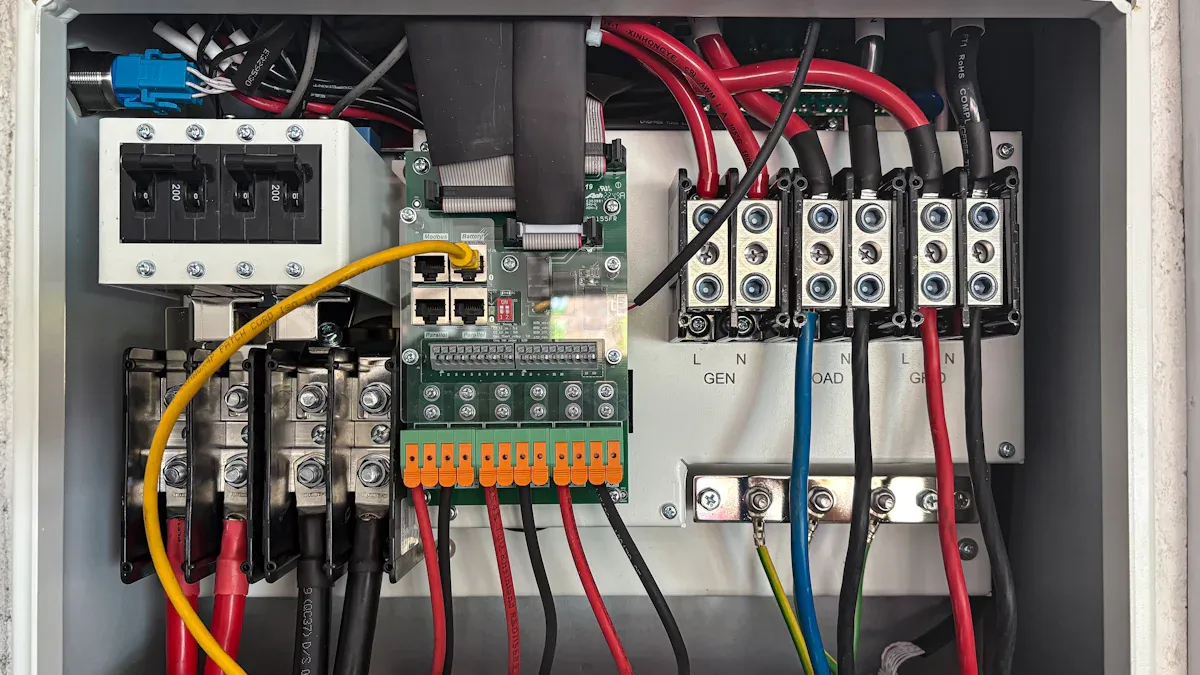
An eFuse operates through a sophisticated internal architecture. It includes a power FET, control logic, and sensing circuits. The power FET acts as a controllable switch. It allows or blocks current flow. The control logic monitors various parameters. These parameters include voltage, current, and temperature. Sensing circuits provide real-time feedback to the control logic. This integrated design enables dynamic protection and management of power.
Overcurrent and Short-Circuit Response
The eFuse actively protects against overcurrent and short-circuit conditions. It continuously monitors the load current. When the current exceeds a set limit, the eFuse responds quickly. Users can configure fault responses. These responses include latch-off or auto-retry modes. In auto-retry mode, designers can adjust the number of retries. They can also set the delay between retries. This intelligent management distinguishes between transient events and actual faults. An adjustable overcurrent blanking timer prevents tripping during brief load transients. This ensures stable operation.
Overvoltage and Thermal Protection
The TPS259823ONRGET also provides robust overvoltage and thermal protection. Internal cutoff circuits mitigate overvoltage events. These circuits quickly disconnect the load when voltage levels become too high. The TPS259823ONRGET features an overvoltage threshold of 7.6V. It also allows for adjustable threshold settings. This customizes protection for specific application needs. For thermal protection, the eFuse monitors its internal temperature. It shuts down if the temperature exceeds a safe limit. This prevents damage from overheating.
Hot-Swap Operation Explained
Hot-swap operation allows components to connect or disconnect without system shutdown. The eFuse manages this process smoothly. It controls the inrush current during connection. This prevents sudden voltage drops. It also protects other system components. The eFuse ensures a controlled power-up sequence. This maintains system stability and reliability.
Benefits of Using the TPS259823ONRGET
Enhanced System Reliability
The TPS259823ONRGET significantly boosts system reliability. Its hot-swappable design includes automatic restart functionality. This ensures minimal downtime. Robust fault protection enhances overall system reliability. The device operates across a wide input voltage range, from 2.7V to 24V. It also handles a maximum current of 15A. This supports diverse applications and ensures stable power delivery. The eFuse provides an accuracy of ±5% for reliable current monitoring. This prevents issues from inaccurate readings. An overvoltage threshold of 7.6V offers strong protection against voltage spikes. This prevents system damage. Adjustable threshold settings allow customization for specific application needs. This optimizes protection. A wide operating temperature range of -40°C to 125°C ensures reliable performance in various environments. This reduces failures due to temperature extremes.
Reduced Board Space and BOM
Integrating the TPS259823ONRGET into designs offers significant advantages in terms of physical footprint and cost. This eFuse provides a 70% board space reduction compared to discrete solutions. It combines multiple protection features into a single chip. This eliminates the need for several individual components. Designers save valuable board space. They also reduce the overall bill of materials (BOM). This leads to more compact and cost-effective electronic products.
Simplified Design and Faster Development
The integrated features of this eFuse simplify the design process. Engineers do not need to design complex discrete protection circuits. The TPS259823ONRGET handles hot-swap, overcurrent, and overvoltage protection internally. This reduces design complexity. It also shortens development cycles. Designers can focus on core system functionalities.
Improved Diagnostics and Uptime
The eFuse offers comprehensive fault reporting. This helps with system diagnostics. It provides a power good signal and a fault output. These signals inform the system about its operational status. This allows for quicker identification of issues. The hot-swappable design, combined with automatic restart, ensures minimal downtime. This is crucial for applications like industrial control systems, data centers, and telecommunications equipment. These systems require reliable power management and continuous operation.
The TPS259823ONRGET eFuse stands as a comprehensive power protection and management solution. Its integrated features, including hot-swap, precise monitoring, and robust protection, significantly enhance system reliability. It also reduces design complexity and improves overall performance. Designers find immense value in its robust, efficient, and compact power management. This minimizes system downtime in critical applications like:
Industrial Control Systems
Automotive Electronics
Medical Devices
Power Supplies
Advanced eFuses will remain vital for future electronic designs, ensuring greater safety and efficiency.
FAQ
What makes an eFuse different from a traditional fuse?
An eFuse is an active integrated circuit. It monitors and controls power flow. A traditional fuse is a passive component. It melts and breaks the circuit once. eFuses can reset themselves. They offer more precise protection and diagnostic features.
Why is hot-swap protection important for electronic systems?
Hot-swap protection allows users to connect or disconnect components while the system is running. This prevents system shutdowns. It manages inrush current. This feature reduces downtime and improves system availability. It is crucial for servers and other critical applications.
How does the TPS259823ONRGET protect against overvoltage?
The TPS259823ONRGET includes adjustable overvoltage protection. It monitors the input voltage. If the voltage goes too high, the eFuse quickly disconnects the load. This prevents damage to sensitive parts. Users can set the voltage threshold.
Can the TPS259823ONRGET automatically reset after a fault?
Yes, the TPS259823ONRGET offers resettable functionality. After a fault like an overcurrent, it can automatically retry. Users can configure the number of retries and the delay between them. This reduces the need for manual intervention and improves uptime.
What are the main benefits of using this eFuse in a design?
Using the TPS259823ONRGET enhances system reliability. It reduces board space and the number of parts needed. It simplifies design work and speeds up development. The eFuse also provides better diagnostics and helps keep systems running longer.
See Also
Safeguarding Electronic Circuits: The Role of ESD Protection Chips Explained
ON Semiconductor Power Management: Unveiling Its Crucial Role and Importance
Emergency Sourcing: Efficiently Acquiring Electronic Components During Critical Times
Understanding the SON8 Power Management Chip: Its Functionality and Operation
Analog Devices' Strategy: Building a Robust and Resilient Chip Supply Chain