Revolutionary Capacitor Technologies Transforming the Industry in 2026
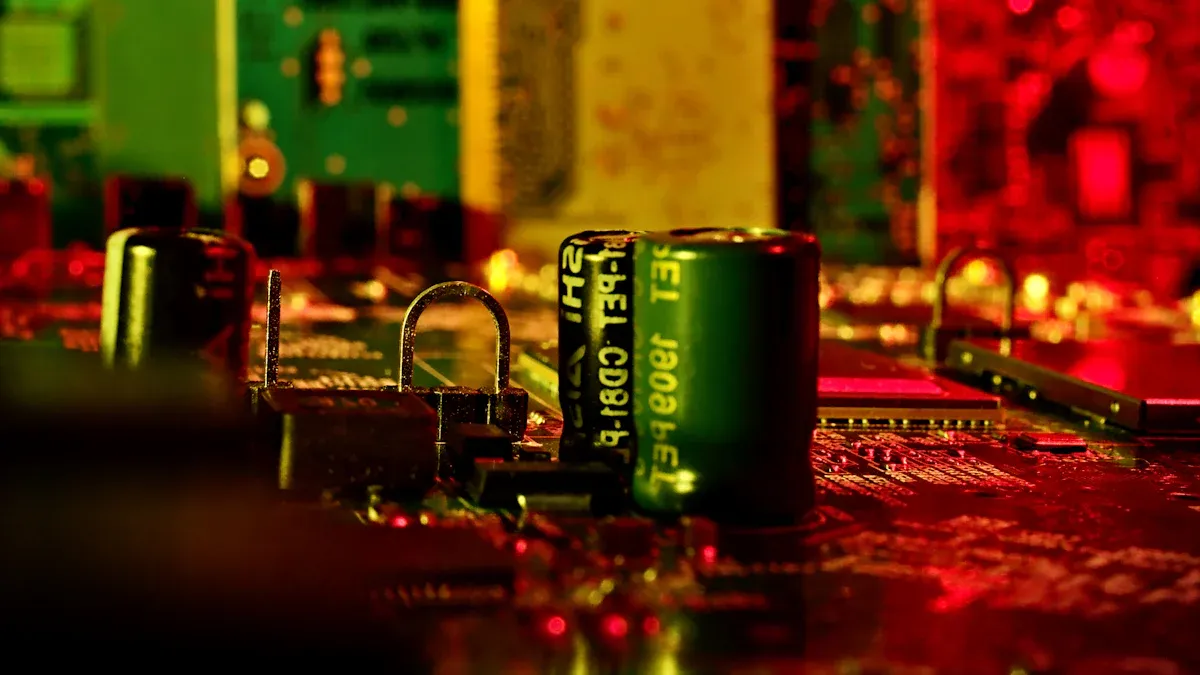
Advancements in capacitor technologies are set to reshape multiple industries by 2026. The global solid-state capacitors market is projected to grow significantly, fueled by rising demand for miniaturized and high-performance electronic devices. Key factors driving this growth include the surge in electric vehicles and innovations in renewable energy technologies.
Industry | Impact of Capacitor Advancements |
|---|---|
Automotive | Capacitors enhance electric vehicle performance through power management. |
Consumer Electronics | Smaller, higher-capacity capacitors enable sleek designs in wearables and medical devices. |
Renewable Energy | Capacitors improve efficiency and stability in energy storage systems. |
The evolution of capacitors news reflects the critical role they play across these sectors.
Key Takeaways
Capacitor technologies are crucial for the growth of electric vehicles and renewable energy systems, enhancing performance and efficiency.
AI-controlled manufacturing optimizes capacitor production, reducing costs and improving reliability through predictive maintenance.
IoT integration allows for real-time monitoring of capacitors, enabling timely interventions and enhancing overall performance.
Innovations in energy density and materials lead to smaller, more efficient capacitors, essential for modern electronic devices.
Sustainability practices in capacitor production are becoming vital, focusing on reducing rare material use and promoting recycling.
Advancements in Capacitors
AI-Controlled Manufacturing
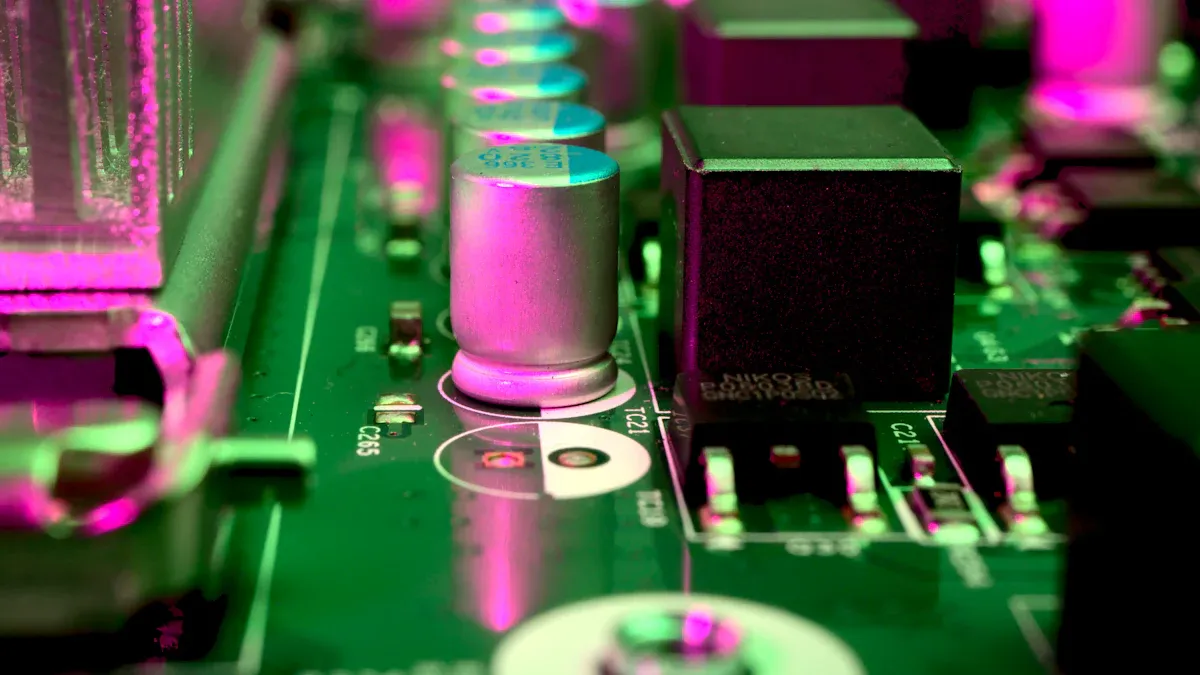
The integration of artificial intelligence (AI) into capacitor manufacturing processes marks a significant advancement in the industry. AI models now predict electrochemical properties and optimize synthesis parameters, enhancing production efficiency. Manufacturers utilize various AI techniques, including artificial neural networks and support vector regression, to streamline workflows. This shift reduces reliance on traditional trial-and-error methods, allowing for rapid material screening and improved performance metrics.
Key benefits of AI-controlled manufacturing include:
Optimized Performance: AI-driven simulations enhance capacitor performance parameters, leading to reduced development time and costs.
Increased Reliability: Machine learning algorithms analyze data to predict failure modes, improving the longevity of capacitors.
Enhanced Precision: Automation powered by AI minimizes defects and accelerates production cycles.
Predictive Maintenance: Systems monitor equipment health in real-time, reducing downtime and operational costs.
Smoltek's advancements in accelerating capacitor production exemplify how AI innovations contribute to increased efficiency and output in the industry. These developments not only improve product quality but also position manufacturers to meet the growing demands of various sectors.
IoT Integration for Monitoring
The Internet of Things (IoT) plays a crucial role in enhancing capacitor performance through real-time monitoring. IoT devices enable manufacturers to track voltage, temperature, and current in capacitors, facilitating early detection of abnormal conditions. This capability is vital for maintaining optimal performance and preventing failures.
Key features of IoT integration include:
Automated Alarms: These alerts notify operators of any irregularities, ensuring timely interventions.
Remote Dashboards: Operators gain comprehensive insights into capacitor performance from anywhere, enhancing decision-making.
Regular Diagnostics: Automated self-tests ensure the reliability of monitoring systems, which is essential for predictive maintenance.
Recent collaborations, such as the partnership between Milesight and Deki Electronics, showcase how integrating advanced IoT capabilities with high-quality capacitor components can enhance reliability and performance. Smart capacitors equipped with internal sensors for temperature and current monitoring further optimize performance and detect anomalies in grid infrastructure.
The advancements in AI-controlled manufacturing and IoT integration represent a transformative shift in capacitor technologies. These innovations not only improve product quality but also drive efficiency across various industries, aligning with the latest capacitors news.
Capacitors News: Performance Improvements
Energy Density Enhancements
Recent innovations in capacitor technology have significantly improved energy density, a critical performance metric for various applications. New materials and design strategies have emerged, allowing capacitors to store more energy in smaller volumes. This advancement is essential for industries such as electric vehicles and renewable energy systems, where space and efficiency are paramount.
Key patents filed in the last two years highlight these advancements. For instance, the US12427754B2 patent introduces a corona-treated multilayered high dielectric constant (HDC) film technology. This technology boasts an energy density four times higher than traditional BOPP materials, enabling manufacturers to create smaller capacitor banks while reducing costs and complexity. Another notable patent, US12119180B2, presents a low dissipation factor (LDF) film technology that maintains full energy capacity at elevated temperatures, extending the lifecycle of capacitors by up to five times.
Patent Number | Description | Key Features |
|---|---|---|
US12427754B2 | Corona-treated multilayered high dielectric constant (HDC) film technology | - 4x higher energy density than BOPP materials |
US12119180B2 | Low dissipation factor (LDF) film technology | - Maintains full energy capacity up to 135°C |
New materials also play a crucial role in enhancing energy density. For example, introducing isolated defects in ferroelectric materials significantly boosts energy storage density. Relaxor ferroelectric materials respond rapidly to electric fields, optimizing energy storage capabilities. Additionally, the ion bombardment technique creates point defects that trap electrons, effectively doubling energy storage density compared to previous values.
Contribution | Description |
|---|---|
Defects in Ferroelectric Materials | Introducing isolated defects in thin films enhances energy storage density significantly, allowing materials to withstand higher voltages and improve performance. |
Relaxor Ferroelectric Materials | These materials respond rapidly to electric fields, optimizing energy storage capabilities and enabling high energy density applications. |
Ion Bombardment Technique | This method creates point defects that trap electrons, reducing conductivity and increasing energy storage density by over twice the previous values. |
Multilayer Ceramic Capacitors
Multilayer ceramic capacitors (MLCCs) have gained prominence due to their reliability and performance. Recent metrics indicate that MLCCs achieve an energy density of 20.0 J·cm−3 with an efficiency of 86.5%. These capacitors also demonstrate high-temperature stability, making them suitable for demanding applications.
Metric | Value |
|---|---|
Energy Density | 20.0 J·cm−3 |
Efficiency | 86.5% |
High-Temperature Stability | Achieved |
Innovations in MLCC design have further enhanced their reliability and lifespan. Advanced dielectric materials allow these capacitors to withstand higher temperatures and voltages. Improved manufacturing techniques, such as precision layering and better bonding methods, increase durability and efficiency. Additionally, integrating smart technology enables real-time performance feedback, allowing for proactive maintenance and optimization.
Innovation Type | Description |
|---|---|
Advanced Dielectric Materials | Enhance energy density and allow capacitors to withstand higher temperatures and voltages. |
Improved Manufacturing Techniques | Precision layering and better bonding methods increase durability and efficiency. |
Integration of Smart Technology | Incorporates sensors for real-time performance feedback, enabling proactive maintenance and optimization. |
While MLCCs are more expensive due to their complex manufacturing process, they offer superior performance compared to other types of capacitors. In contrast, simpler types like SLCs are cheaper but may require more units to match the performance of MLCCs. Thus, the choice between these capacitor types often depends on the specific requirements of the application.
Strategic Importance of Capacitor Technologies
Renewable Energy Applications
Capacitors play a vital role in renewable energy systems, particularly in solar and wind power. They stabilize power supply by absorbing excess energy during peak production and releasing it during low-demand periods. This capability is crucial for maintaining grid stability. Capacitors manage fluctuations in energy output, ensuring a consistent energy flow. In solar power systems, they regulate voltage and store energy generated during peak sunlight hours. For wind energy systems, capacitors help maintain power quality by compensating for reactive power, preventing voltage drops.
Key benefits of capacitors in renewable energy include:
Stabilization of Power Supply: They absorb excess energy and release it when needed.
Voltage Regulation: Capacitors ensure that voltage levels remain stable during energy production.
Improved Grid Stability: They manage fluctuations, enhancing the reliability of energy delivery.
Electric Vehicle Innovations
Capacitors significantly enhance electric vehicle (EV) performance, particularly in battery management and charging processes. They act as energy buffers, storing and releasing energy on demand. This function helps maintain stable voltage during charging, preventing power surges or drops. As a result, capacitors ensure a smoother and faster charging experience.
The advantages of capacitors in electric vehicles include:
Quick Energy Bursts: They provide rapid energy release, reducing charging time.
Voltage Stabilization: Capacitors maintain consistent voltage levels, crucial for integrating renewable energy sources.
Battery Longevity: By stabilizing voltage, they reduce the impact of power fluctuations, extending the life of EV batteries.
Innovations such as NanoPlex capacitors further enhance EV performance. These capacitors reduce the demand on the vehicle's battery, enabling faster charging through next-generation high-frequency switches. This advancement enhances convenience for long trips, making electric vehicles more appealing to consumers.
Market Applications and Trends
Consumer Electronics
The consumer electronics sector is poised for significant growth in capacitor applications by 2026. Key drivers include:
Technological advancements and miniaturization.
Increasing demand for energy-efficient solutions.
The rise of high-frequency applications, such as 5G, which require stable NPO capacitors.
A growing market for smartphones and wearables, boosting overall demand.
Sustainability trends that encourage the development of eco-friendly capacitors.
The proliferation of automation and IoT devices, increasing the need for advanced capacitors.
Capacitor technologies enhance the functionalities of smart consumer devices by supporting power management, energy buffering, and noise suppression. As devices become more compact and feature-rich, the demand for smaller and more efficient capacitors continues to rise.
Automotive Capacitors
The automotive industry is experiencing a transformative shift due to the rising integration of electronic systems in vehicles. The automotive polymer capacitors market is expected to grow significantly, driven by:
The increasing demand for electric vehicles (EVs) and hybrid electric vehicles (HEVs), necessitating efficient power management solutions.
Innovations in material science and manufacturing processes that enhance the performance and durability of polymer capacitors.
The growing emphasis on automation and connectivity in vehicles, requiring reliable components that can endure harsh conditions.
Capacitors play a critical role in applications such as power management and energy storage. The formalization of DC-link capacitor qualification standards aids market growth by providing clear requirements for service life and environmental exposure. This clarity facilitates better validation plans for original equipment manufacturers (OEMs) and shortens test cycles.
The automotive sector's rapid shift towards electric vehicles, particularly in regions like China and India, further drives the demand for advanced capacitor technologies. Capacitors are essential for signal processing and energy storage, making them indispensable in modern automotive applications.
Supply Chain Challenges in Capacitors
Raw Material Sourcing
Sourcing raw materials for capacitor production presents significant challenges. Manufacturers face material shortages, production delays, and limited availability of essential components like aluminum and tantalum. Geopolitical issues further complicate sourcing efforts. In 2023, the price of aluminum rose by 15% due to these disruptions and heightened demand. This volatility directly impacts production costs and the availability of capacitors.
Additionally, the COVID-19 pandemic exacerbated supply chain issues, leading to lead times for certain capacitor types extending to over 50 weeks in 2022. Such delays highlight the ongoing struggles within the electronics industry, where demand for capacitors continues to surge.
Sustainability Practices
Leading capacitor manufacturers are increasingly adopting sustainability practices to address environmental concerns. Key initiatives include:
Reducing reliance on rare metals: Manufacturers minimize the use of rare materials in capacitor production.
Exploring alternative materials: The industry investigates conductive polymers and ceramic-based capacitors as more sustainable options.
Recycling and reuse strategies: Companies focus on recovering valuable metals from end-of-life products to reduce waste and resource consumption.
Government policies and industry initiatives: New regulations promote the use of sustainable materials in manufacturing.
Environmental regulations also impact sourcing and production. Stricter requirements necessitate responsible sourcing, energy efficiency, and recycling initiatives. For instance, the extraction of raw materials can lead to habitat destruction, while manufacturing processes contribute to greenhouse gas emissions. As a result, manufacturers must navigate these challenges while striving to meet sustainability goals.
By addressing raw material sourcing and implementing sustainable practices, the capacitor industry can better position itself for future growth while minimizing its environmental footprint.
Capacitor technologies are poised to revolutionize industries by 2026 and beyond. Key advancements include:
Development of high-performance dielectric materials for ultra-compact capacitors.
Integration of IoT functionalities for predictive analytics and enhanced management.
Research into next-generation materials like graphene and advanced polymers.
These innovations drive the electric capacitors market, projected to grow at a CAGR of around 6% through 2030. As industries demand energy-efficient devices, capacitors will play a crucial role in shaping the future of electric vehicles and renewable energy systems.
FAQ
What are the main benefits of advanced capacitor technologies?
Advanced capacitor technologies enhance energy efficiency, improve performance, and enable miniaturization in electronic devices. They also support renewable energy systems and electric vehicles, contributing to grid stability and faster charging capabilities.
How do capacitors impact electric vehicles?
Capacitors improve electric vehicle performance by stabilizing voltage and providing quick energy bursts. They enhance battery management, reduce charging times, and extend battery life, making EVs more efficient and reliable.
What role do capacitors play in renewable energy systems?
Capacitors stabilize power supply in renewable energy systems by absorbing excess energy and releasing it during low-demand periods. They help regulate voltage and manage fluctuations, ensuring consistent energy delivery.
What challenges does the capacitor industry face?
The capacitor industry faces challenges such as raw material shortages, geopolitical issues, and sustainability concerns. Manufacturers must navigate these obstacles while striving to meet growing demand and environmental regulations.
How is IoT integration changing capacitor technology?
IoT integration allows for real-time monitoring of capacitor performance. This technology enables predictive maintenance, automated diagnostics, and improved reliability, enhancing overall efficiency in various applications.
See Also
Key Developments Influencing the Analog IC Sector by 2025
Breakthroughs Enhancing Local Memory Chip Production in 2025
New Developments in Automotive-Grade Semiconductor Innovations
Leading RF Component Providers for 5G Technology in 2025
Proven Approaches to Addressing Electronic Component Scarcity