Mainstream technologies in short-range wireless communication

Short-range wireless technologies are very important for connecting things today, especially as they become mainstream technologies. They link different devices in homes and businesses, creating smart systems. For example, Bluetooth and Wi-Fi allow your devices to communicate easily. This connection enhances your daily life by enabling automation and control.
Additionally, these mainstream technologies eliminate the need for wires, providing you with more flexibility and convenience. Understanding how these common technologies work helps you choose the best devices and setups for your home.
Wi-Fi in Short-Range Communication
Wi-Fi Features
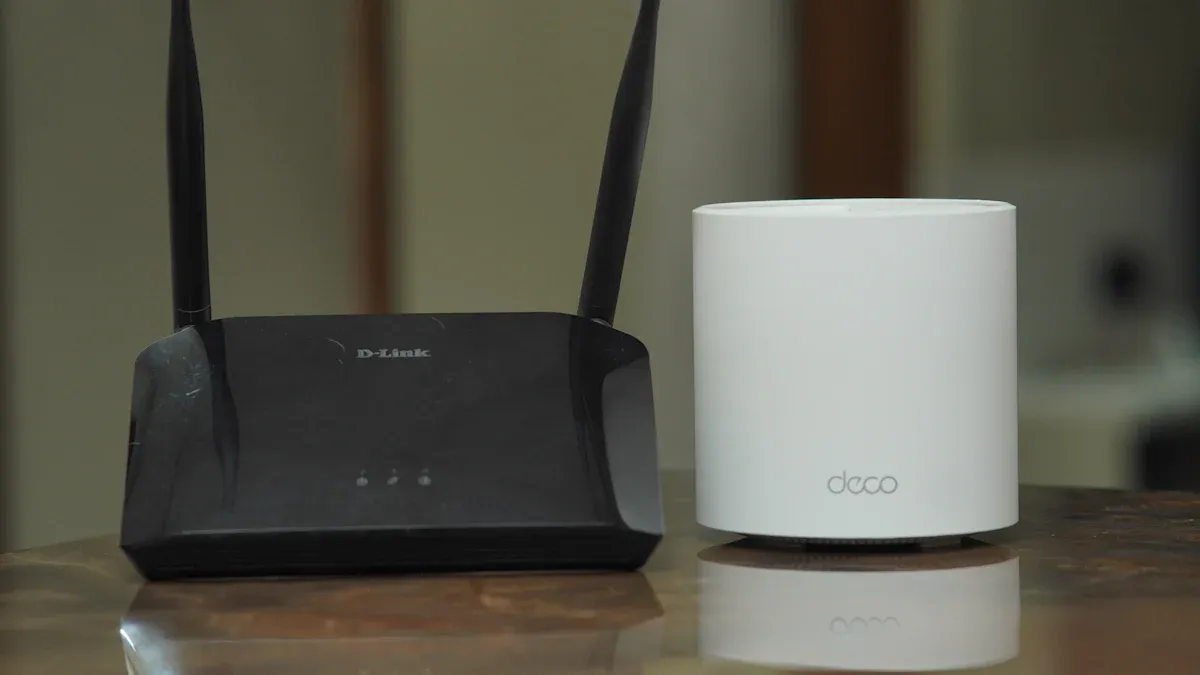
Wi-Fi is very important for short-range wireless communication. It works on the 2.4GHz frequency band. This lets devices connect without using wires. Here are some key features of Wi-Fi:
Communication Range: Wi-Fi can reach about 100 meters. This makes it great for homes and offices.
Data Transfer Speed: It can go as fast as 11Mb/s. This helps with quick data sharing.
Encryption Mode: Wi-Fi uses WPA/PSK for encryption. This keeps your data safe.
Feature | Wi-Fi |
|---|---|
Frequency Band | 2.4GHz |
Communication Range | 100m |
Data Transfer Speed | 11Mb/s |
Encryption Mode | WPA/PSK |
Wi-Fi is a short-to-medium-range technology. It works well inside buildings. Cellular networks are for longer distances. The newest version, Wi-Fi 6, makes it faster and better.
Wi-Fi Applications
Wi-Fi is very important in smart homes. It connects many devices. You can control them from your smartphone or tablet. Common uses of Wi-Fi in smart homes include:
Smart speakers and displays
Smart TVs and cameras
Smart thermostats and locks
Smart plugs and bulbs
These devices use Wi-Fi to talk to each other and to you. The new Wi-Fi 6 technology makes this better. It lets many devices share the same channel. This makes your smart home network faster and better. Also, WPA3 encryption gives stronger security for your devices. This keeps your home safe.
Bluetooth LE as a Mainstream Technology

Bluetooth LE Features
Bluetooth Low Energy (BLE) is a popular choice for short-range communication. It has many features that make it great for different uses. Here are some important traits:
Feature | Bluetooth LE | Bluetooth Classic |
|---|---|---|
Very low, can last 1-2 years on a 1,000 mAh battery | High, can use 1,000 mAh in a few hours | |
Data Transmission | Small packets | Good for audio and high bandwidth data |
Design Optimization | Sends data in bursts | Streams continuously |
BLE uses very little power. This lets devices work for a long time without changing batteries often. It does this by using small data packets and going into low-power modes when not in use. You can expect BLE devices to last longer. This makes them perfect for everyday gadgets.
Bluetooth LE Applications
Bluetooth LE is found in many devices you use every day. It helps improve your smart home and wearable tech. Here are some common uses:
Smart lights and thermostats
Smart locks and smoke detectors
Wearable devices like smartwatches and fitness trackers
Contact tracing systems for health monitoring
Tracking devices like AirTags and Tiles
In home automation, BLE is very important for safety and ease. You can control smart devices from far away. This keeps your home safe and running well. The flexibility of Bluetooth LE makes it a key part of popular technologies, allowing easy connections in your life.
Zigbee and Its Applications
Zigbee Features
Zigbee is a strong technology for short-range wireless communication. It has some important features:
Feature | Zigbee | Bluetooth LE |
|---|---|---|
Topologies | Star, mesh, cluster tree | Point-to-point, star |
Power Consumption | Low | Low |
Data Rate | ~100 Kbps | Up to 2 Mbps |
Range | Up to 100 meters | Up to 100 meters |
Network Size | Supports larger networks | Limited to smaller networks |
Use Cases | Smart homes, industrial sensors | Wearable devices, audio |
Zigbee works on the IEEE 802.15.4 standard. This helps it use low energy for communication. It sends small data only when needed. This saves battery life. Zigbee devices can last for months or even years on one battery. Its mesh networking makes it easy to add more devices. This helps smart homes grow easily.
Zigbee Applications
Zigbee is used in many smart home applications. Here are some common uses:
Home Automation: Control smart devices like lights and locks.
Wireless Sensor Networks: Create networks of sensors for data collection.
Industrial Control Systems: Automate and monitor processes in industrial settings.
Medical Data Collection: Gather health-related data remotely.
In smart homes, Zigbee connects devices like thermostats, lights, door locks, and security cameras. This technology helps you manage your home easily and safely. With Zigbee, you can build a smart home system that improves your daily life.
Zigbee's low-power design and mesh networks make it an important part of popular technologies in smart home automation. You can enjoy the ease of connected devices while making sure they work well.
Thread Protocol Overview
Thread Features
Thread is a strong protocol for short-range wireless communication. It has many important features that improve its use and safety:
Feature | Description |
|---|---|
Security Measures | Thread uses high-level security encryption with 128-bit AES for data protection. |
Network Architecture | It makes a mesh network so devices can talk without needing a central hub. |
Operational Efficiency | If one device fails, the data goes to the next device, keeping communication reliable. |
Authenticated Device Joins | Devices join the mesh safely, making it hard for unauthorized users to get in. |
These features make Thread an important technology. Its mesh networking helps devices connect directly, which improves reliability and growth.
Thread Applications
Thread is used in many areas, especially in smart homes and IoT settings. Here are some common uses:
Application Type | Description |
|---|---|
Smart Home Devices | Thread works with many devices like light bulbs, thermostats, and sensors, allowing them to communicate easily. |
Low-Power Connectivity | Made for low-power devices, Thread lets sensors and locks run for years on batteries. |
Scalability | The mesh design helps add more devices without losing performance. |
Thread lets devices from different brands work together, making smart home setups easier. |
Thread improves how devices work together in its network by using a common protocol. It allows devices from different companies to connect with various clouds, supporting many application layers without needing extra hardware or software. This feature makes your smart home setup simpler and more efficient.
With Thread, you can have a smooth experience connecting and controlling your smart devices. Its strong features and uses make it an important part of smart home technology's future.
Interoperability Among Mainstream Technologies
Comparing Technologies
Interoperability is very important for short-range wireless technologies. It helps create a smooth smart home experience. Each technology has special features that affect how well they work together. Here’s a comparison of Wi-Fi, Bluetooth LE, Zigbee, and Thread for interoperability:
Technology | |
|---|---|
Thread | Made for working well within its network; needs bridges for outside devices. |
Zigbee | Lets certified devices connect; how well they work together depends on market reach and device support. |
Wi-Fi | Most common interoperability; devices connect if they follow standard rules. |
Bluetooth LE | Great short-range interoperability; standard profiles help devices talk to each other. |
This table shows that Wi-Fi has the widest compatibility. Zigbee and Thread work best in certain situations. Bluetooth LE is great for short-range uses, making it perfect for wearables and smart home gadgets.
Use Cases and Considerations
When you mix different short-range wireless technologies in a smart home, you may face some challenges. Here are some common problems:
Limited range of protocols, usually from a few centimeters to about a hundred meters.
Walls and furniture can weaken the signal.
Environmental factors can cause communication issues.
These problems can affect how well your devices talk to each other. You need to think about the strengths and weaknesses of each technology when setting up your smart home.
Here’s a summary of the pros and cons of the technologies:
Protocol | Strengths | Weaknesses |
|---|---|---|
Wi-Fi | High data speed, good security | Uses a lot of power |
Bluetooth LE | Common in many devices, good range | Needs a hub for IP communication |
Zigbee | Low power use, good for less frequent data | Shorter range compared to Wi-Fi |
Thread | IP-based, low power, can grow easily | Might interfere with 2.4 GHz Wi-Fi devices |
You can see that Wi-Fi is fast but uses more power. Bluetooth LE is popular but needs a hub for IP connections. Zigbee is good for low power but has a shorter range. Thread is scalable and IP-based, which helps it fit better with current networks.
Interoperability standards like Matter are important for improving compatibility among these technologies. Here are some key points about Matter:
Matter gives a common framework for different protocols to work together.
It improves compatibility among Zigbee, Bluetooth, and Wi-Fi technologies.
Devices from different brands can communicate well, which is key for the IoT world.
By using Matter, you can make sure your devices work together smoothly, no matter the brand or technology.
In conclusion, knowing about short-range wireless technologies like Wi-Fi, Bluetooth LE, Zigbee, and Thread is important for building good smart home systems. Each technology has its own special features and uses.
When picking the right technology, think about these things:
Range: How far does your data need to go?
Power Consumption: Is battery life important to you?
Data Rate: What speed do you need for your apps?
Cost: What is your budget for devices and setup?
Security: How important is protecting your data?
Choosing the right technology means balancing performance, cost, and compatibility. For a smart home that lasts, Wi-Fi is a great choice because it is widely used and works with many devices. By looking at your specific needs, you can make smart choices that improve your smart home experience.
See Also
Exploring Low Power IoT Chips And Their Uses
Comparative Analysis Of Leading Bluetooth Chips For Wearables
New Developments In Radar Signal Processing Chip Tech
Addressing Obstacles In Military Wireless Communication Systems
Understanding Communication Chips: Their Functionality And Purpose