Latest Updates in the Semiconductor Supply Chain

The semiconductor supply chain plays a pivotal role in driving modern technology forward. Recent global events, particularly the COVID-19 pandemic, have caused significant disruptions. For instance, the pandemic led to an estimated $110 billion in production losses within the global automotive sector by May 2021. Geopolitical tensions, such as the US-China trade war, further complicated the landscape by introducing export restrictions and stockpiling behaviors. These challenges highlight the importance of staying informed about the latest parts re and the electronic components industry news, as well as semiconductor supply chain updates, since they directly influence market trends and innovation.
Key Takeaways
Stay informed about semiconductor supply chain updates to anticipate market shifts and optimize strategies.
Embrace advancements in nanoelectronics and photonic chips to enhance device performance and energy efficiency.
Diversify manufacturing locations to reduce risks from geopolitical tensions and supply chain disruptions.
Leverage strategic collaborations to improve supply chain efficiency and foster innovation in the semiconductor industry.
Monitor market trends and statistics to capitalize on growth opportunities in the electronic components sector.
Tech Advancements in Semiconductor Supply Chain
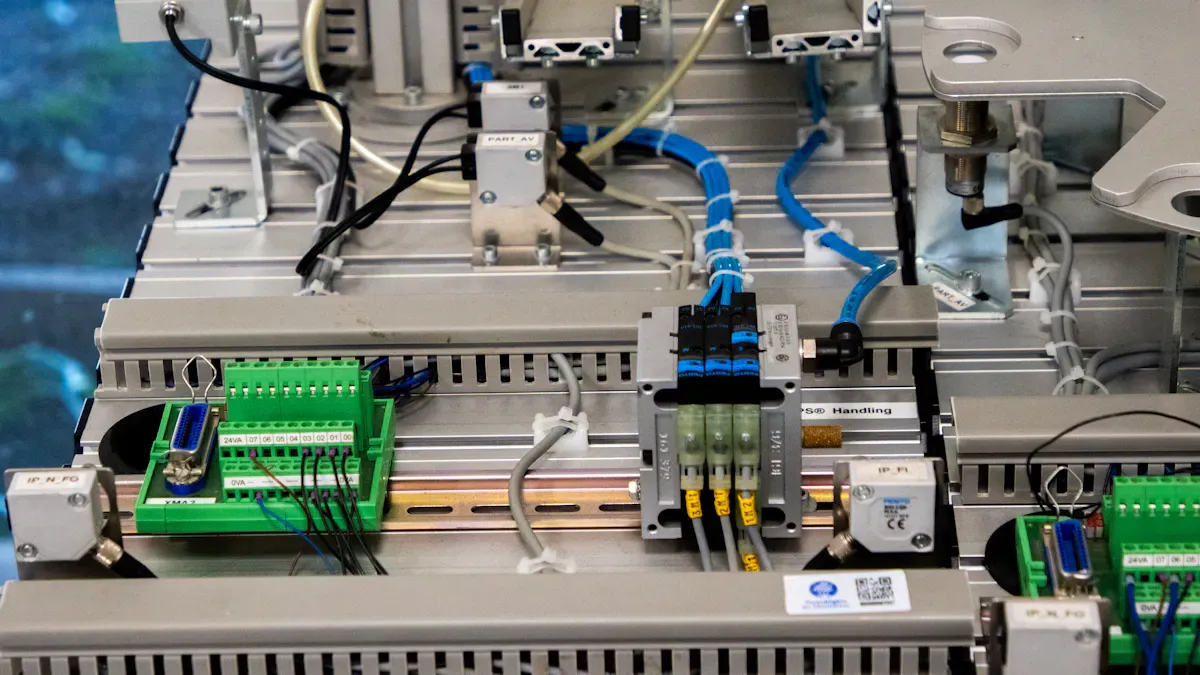
Breakthroughs in Nanoelectronics
Recent advancements in nanoelectronics have significantly transformed the semiconductor landscape. Researchers have made notable progress in various areas, enhancing the performance and efficiency of electronic components. Key breakthroughs include:
New Materials: The exploration of 2D materials, such as graphene, has opened new avenues for electronic components and interconnects. These materials exhibit superior electrical properties, which are crucial for next-generation devices.
Quantum Computing: Progress in quantum computing has introduced nanoscale quantum bits (qubits), which promise to revolutionize data processing and communication. This technology enables faster computations and more secure data transmission.
Nanomaterials for Energy: Innovations in nanomaterials have led to the development of more efficient solar cells, including perovskite solar cells. These advancements contribute to sustainable energy solutions.
Battery Technology: Research into high-capacity and fast-charging batteries, along with supercapacitors, has the potential to enhance energy storage systems significantly.
Nanoscale Fabrication: Advances in fabrication techniques allow for the manufacturing of miniaturized devices and components, pushing the boundaries of what is possible in electronics.
The impact of these breakthroughs is profound. For instance, the development of new materials like graphene and gallium nitride improves electrical properties and thermal management. These innovations address the limitations of traditional silicon-based semiconductors, paving the way for enhanced performance in various applications.
Innovations in Photonic Chips
Photonic chips represent another frontier in semiconductor technology. Recent innovations have focused on harnessing light for data processing and communication. Key developments include:
Entangled Photons: Researchers have achieved high-fidelity generation of entangled photons, which are essential for quantum communication and secure data transfer.
Quantum Teleportation: Long-distance demonstrations of quantum teleportation have showcased the potential for instantaneous data transfer across vast distances, a game-changer for telecommunications.
Quantum Nodes: The development of quantum nodes and channels facilitates the establishment of robust quantum communication networks, enhancing security and efficiency.
These innovations in photonic chips not only improve data transmission speeds but also reduce energy consumption, making them a vital component of the future semiconductor supply chain. As the demand for faster and more efficient electronic components continues to rise, these advancements will play a crucial role in shaping the industry.
Market Trends in Electronic Components Industry
Current Market Statistics
The electronic components market continues to expand rapidly, driven by strong demand across multiple sectors. In 2025, the market is expected to generate approximately USD 701 billion. Analysts project this figure to reach USD 1 trillion by 2030, reflecting a compound annual growth rate (CAGR) of 7.36%. This growth highlights the increasing importance of electronic components in modern technology and manufacturing.
Key market statistics include:
Asia-Pacific will account for nearly 47.5% of global sales in 2024. This dominance stems from a robust manufacturing ecosystem in countries like China, Taiwan, Japan, and South Korea.
The automotive segment is growing at an 8.1% CAGR through 2030, fueled by the rise of electric vehicles and advanced driver-assistance systems.
Passive components, such as resistors and capacitors, are projected to grow at an 8.3% CAGR, outpacing active components like transistors and integrated circuits.
The Middle East and Africa represent the fastest-growing regions, with a CAGR of 7.5%, driven by expanding infrastructure and industrialization.
The following table summarizes regional market shares and key contributors:
Region | Market Share (2024) | Key Contributors |
|---|---|---|
Asia-Pacific | 47.5% | Strong semiconductor production and manufacturing infrastructure in China, Taiwan, Japan, South Korea |
North America | N/A | Growth supported by local fabrication initiatives and CHIPS Act subsidies |
Europe | N/A | Established electronics industry with investments in sustainable fabs and automotive electronics |
Middle East & Africa | N/A | Fastest-growing market due to infrastructure development |
Asia-Pacific’s electronic components market size was estimated at USD 176.52 billion in 2025 and is expected to reach around USD 419.08 billion by 2035. This region remains the global hub for semiconductor production and assembly.
Future Projections
The electronic components industry shows promising growth prospects over the next decade. The active electronic components market alone is projected to grow at a CAGR of 9.1% from 2025 to 2032. Meanwhile, the consumer electronics segment is expected to expand at a more moderate rate of 3.54% annually.
China’s market is forecasted to grow at an annualized rate of 4.0% between 2023 and 2028, reaching approximately USD 373.2 billion by 2028. This growth reflects China’s ongoing investments in semiconductor manufacturing and technology development.
The electronic parts management solutions market is set to exceed a CAGR of 15% in the coming years. This surge results from the increasing complexity of electronic components and the need for efficient inventory and supply chain management.
Artificial intelligence (AI) technologies play a critical role in shaping these market trends. AI integration drives demand for specialized semiconductors and sensors used in smart devices, healthcare, and automotive applications. For example:
AI enhances the functionality and efficiency of electronic components, enabling features like voice recognition and predictive maintenance.
The medical device industry benefits from AI through improved diagnostic imaging and remote patient monitoring.
The Internet of Things (IoT) and 5G technology development rely heavily on AI-enabled components to support connectivity and data processing.
These trends encourage companies to invest heavily in research and development. The rising demand for consumer electronics, growth in automotive and telecommunication sectors, and expansion of advanced technologies such as 5G and AI push the industry toward innovation. Regions like Asia-Pacific and North America lead in R&D focus, driven by their manufacturing infrastructure and technological adoption.
Staying informed about electronic components industry news semiconductor supply chain updates market trends latest parts re remains essential for stakeholders. These insights help companies anticipate market shifts and optimize their strategies in a rapidly evolving environment.
Strategic Collaborations and Supply Chain Updates
Key Industry Alliances
Strategic collaborations have become essential in the semiconductor industry. Companies are forming alliances to enhance their competitive edge. The entry of non-traditional players, such as tech platforms and automakers, into semiconductor design is intensifying competition. This shift transforms market dynamics in unprecedented ways. Collaborative efforts among manufacturers, distributors, and system integrators are crucial for reducing counterfeit risks. Information sharing fosters collective awareness and enables faster responses to threats.
Impact on Supply Chain Efficiency
Recent collaborations have led to measurable improvements in supply chain efficiency. The following table outlines key enhancements resulting from these partnerships:
Improvement Type | Description |
|---|---|
Connected Intelligence | AI-enabled ecosystems integrate various data, improving collaborative management and responses. |
Automation of Planning | AI tools automate planning and risk monitoring, enhancing coordination among partners. |
New Performance Metrics | Organizations adopt metrics for collaboration effectiveness, emphasizing transparency and resilience. |
Cost Optimization | Collaborative planning reduces redundancy and improves resource utilization, enhancing efficiency. |
Improved On-time Delivery | Collaboration leads to better delivery schedules and stronger supplier relationships. |
Innovation and Resilience | Aligning goals and sharing data fosters innovation and strengthens supply chain resilience. |
Collaborative frameworks, such as OSCAR, help companies anticipate disruptions. These frameworks create shared operating models that maintain confidentiality while enhancing competitive advantage. They establish processes for safe data sharing and harmonized forecasting across tiers. This approach builds essential capabilities like real-time risk sensing and multi-tier visibility.
Geopolitical Influences on Semiconductor Production

Trade Policies and Challenges
Recent trade policies have significantly impacted the semiconductor supply chain. Tariffs imposed in April 2025 have led to adjusted revenue forecasts and declines in unit shipments for semiconductor-heavy products. Companies now view manufacturing as a strategic asset, focusing on regional resilience in their supply chains. Export restrictions from China on critical materials have raised costs by 30-50%, highlighting vulnerabilities within the supply chain. The U.S. government has tightened export controls and increased domestic semiconductor manufacturing, with substantial investments from companies like TSMC. Meanwhile, China is prioritizing self-reliance in semiconductors, utilizing state-controlled funding to enhance its domestic capabilities.
Evidence Type | Description |
|---|---|
Tariffs Impact | Tariffs imposed in April 2025 have led to adjusted revenue forecasts and declines in unit shipments for semiconductor-heavy products. |
Strategic Shifts | Companies are increasingly viewing manufacturing as a strategic asset, leading to a focus on regional resilience in supply chains. |
Material Costs | Export restrictions from China on critical materials have raised costs by 30-50%, affecting supply chain vulnerabilities. |
U.S. Policy | The U.S. is tightening export controls and increasing domestic semiconductor manufacturing, with significant investments from companies like TSMC. |
China's Strategy | China is focusing on self-reliance in semiconductors, with state-controlled funding to enhance domestic capabilities. |
Regional Manufacturing Shifts
The semiconductor industry has experienced significant regional manufacturing shifts over the past few years. Countries like the U.S. and Europe are witnessing a resurgence in semiconductor production due to recent investments. In contrast, Japan's capacity is declining despite government initiatives.
As of September 2025, China is expanding its semiconductor manufacturing with two new fabs, while the U.S. has seventeen fabs planned or under construction, focusing on advanced technologies. Across Asia, including Japan and South Korea, 23 new fabs are in development, indicating a significant shift in manufacturing capacity towards these regions.
Region | Market Share in 2020 | Future Projections |
|---|---|---|
Japan | 10% | Decline despite initiatives |
Europe | 10% | Expected rise due to investments |
U.S. | 17% | |
South Korea | 20% | Continued growth |
Taiwan | 23% | Continued growth |
China | 20% | Growth in new fabs |
These shifts emphasize the need for diversification in manufacturing operations to mitigate geopolitical risks. Companies are investing in onshoring, nearshoring, and 'friendshoring' to enhance resilience and take advantage of regional trade agreements. This reflects a significant change in the global trade landscape, necessitating a strategic approach to supply chain management.
Key Implications:
Diversification is essential to reduce reliance on single regions or suppliers.
Expanding manufacturing to regions like the U.S., Europe, and Vietnam can hedge against concentrated risks.
Reliable infrastructure and skilled workforces are critical for successful regional manufacturing.
The semiconductor supply chain faces significant changes and opportunities. Key updates include:
Global semiconductor sales are projected to reach $791.7 billion in 2025, marking a 25.6% increase from 2024.
The industry emphasizes building a skilled workforce to meet growth demands.
The SIA supports initiatives like Pax Silica to enhance AI and supply chain security.
Looking ahead, ongoing monitoring of industry changes will enable stakeholders to adapt to evolving market conditions and geopolitical risks. This adaptability is crucial for maintaining a reliable supply of semiconductors, essential for various technologies.
FAQ
What causes semiconductor supply chain disruptions?
Semiconductor supply chain disruptions arise from global events like pandemics, geopolitical tensions, and natural disasters. These factors affect raw material availability, manufacturing capacity, and logistics, leading to delays and increased costs.
How do technological advancements impact the semiconductor supply chain?
Technological advancements improve chip performance and manufacturing efficiency. Innovations in nanoelectronics and photonic chips enable faster, smaller, and more energy-efficient devices, which increase demand and require supply chains to adapt quickly.
Why are strategic collaborations important in this industry?
Strategic collaborations enhance supply chain resilience by sharing information, reducing counterfeit risks, and improving planning. Partnerships enable companies to respond faster to disruptions and optimize resource use, boosting overall efficiency.
How do geopolitical factors influence semiconductor production?
Trade policies, tariffs, and export restrictions shape manufacturing locations and costs. Countries invest in domestic fabs to reduce reliance on foreign suppliers, causing shifts in regional production and supply chain strategies.
What role does AI play in the semiconductor market growth?
AI drives demand for specialized semiconductors used in smart devices, automotive systems, and healthcare. It also improves supply chain management through automation and predictive analytics, supporting market expansion.
See Also
Ways Analog Devices Maintains Strong And Reliable Chip Supply
Key Developments Influencing The Analog IC Market In 2025
New Advances Transforming Automotive-Grade Semiconductor Technology
Breakthroughs Boosting Local Memory Chip Production In 2025
Proven Methods To Overcome Electronic Parts Supply Challenges