Latest Electronics Industry News and Trends

Staying updated on electronics industry news is crucial for you as a consumer or business. The rapid pace of innovation shapes your choices and impacts your daily life. For instance, the global electronics market is projected to grow significantly, reaching approximately 1,756.39 billion USD by 2034.
Recent trends show that 5G technology enhances smart devices, improving convenience. The Internet of Things (IoT) creates interconnected systems that elevate user experiences in smart homes. Sustainability trends also encourage companies to innovate, aligning products with your values.
Adapting to these changes ensures you remain competitive in a fast-evolving landscape.
Key Takeaways
Stay updated on 5G technology. It enhances connectivity and speeds up smart devices, improving your daily life.
Embrace AI in manufacturing. It optimizes processes, reduces downtime, and improves product quality, benefiting both consumers and businesses.
Support sustainability in electronics. Choose products that use renewable materials and promote recycling to help protect the environment.
Explore smart home innovations. 5G technology allows for seamless control and monitoring of devices, making homes more efficient and secure.
Engage with industry trends. Collaborate with others to share knowledge and resources, ensuring you stay competitive in a fast-evolving market.
5G and Electronics Industry News
Enhanced Connectivity
5G technology is revolutionizing the electronics industry by providing faster and more reliable connectivity. This advancement allows devices to communicate more efficiently, enhancing user experiences. Here are some key benefits of 5G for connectivity:
Optimized Traffic Management: AI systems using 5G can analyze traffic data in real-time. This capability improves flow and reduces congestion on networks.
Public Safety: IoT surveillance systems leverage 5G to provide real-time data. This feature enables faster emergency responses, enhancing safety in urban areas.
Sustainability: Smart grids and IoT-managed systems contribute to environmentally friendly urban development. They help reduce energy consumption and optimize resource use.
However, integrating 5G connectivity presents challenges for electronics manufacturers. The table below outlines some of these challenges:
Challenge | Description |
|---|---|
Network Slicing | Allows deployment of multiple virtual networks on shared infrastructure, posing unique technical challenges. |
Radio Resource Management (RRM) | Involves new scheduling approaches to manage diverse traffic types and maximize bandwidth utilization. |
Security Vulnerabilities | IoT devices present significant security risks, accounting for a large percentage of malware detection events. |
Bandwidth Management | Handling massive bandwidth requirements is crucial for effective 5G integration. |
Infrastructure Scaling | Manufacturers must address issues related to scaling infrastructure to support 5G connectivity. |
Smart Home Integration
The adoption of 5G technology significantly influences the development of smart home devices. With 5G, you can expect improvements in various aspects of your smart home experience:
Aspect | Description |
|---|---|
Speed | 5G technology offers three times the speed and a hundred times faster connectivity than 4G. |
Latency | Ultra-low latency enables real-time communication and monitoring of smart devices. |
Scalability | Supports dense device networks, allowing simultaneous operation of multiple smart home devices. |
Security | Improved encryption and firmware updates enhance the security of smart home systems. |
Challenges | Infrastructure costs, security risks, and interoperability with legacy systems are significant issues. |
5G enhances the efficiency and interconnectivity of smart home ecosystems. You can enjoy seamless control of devices, real-time monitoring of home security systems, and energy optimization of connected appliances. The technology ensures instant updates and responsive automation, making homes smarter and more intuitive.
AI and Automation Trends

AI in Manufacturing
AI plays a crucial role in transforming manufacturing processes within the electronics industry. You can expect several benefits from AI integration, including:
Predictive Maintenance: AI monitors equipment health to prevent failures. This approach can reduce downtime by up to 50%, saving manufacturers time and money.
Supply Chain Optimization: AI predicts shortages and optimizes logistics. This capability enhances efficiency in inventory management, ensuring that you receive products on time.
Demand Forecasting: AI adjusts production based on consumer demand. This adjustment can reduce inventory waste by 30%, helping companies meet your needs without overproducing.
Recent case studies highlight the impact of AI in manufacturing. For instance, Siemens saved millions of euros annually through predictive maintenance strategies. LG Electronics shortened the development cycle for new quality inspection models by 50%, significantly improving accuracy. These advancements demonstrate how AI can streamline operations and enhance product quality.
Application | Description | Impact/Results |
|---|---|---|
Predictive Maintenance | AI monitors equipment to prevent failures. | |
Supply Chain Optimization | AI predicts shortages and optimizes logistics. | Enhanced efficiency in inventory management. |
AI-Powered Demand Forecasting | AI adjusts production based on consumer demand. | Reduced inventory waste by 30%. |
Autonomous Warehousing | AI robots manage packaging and shipping. | Processes over 1 million packages daily. |
Quality Control | AI uses computer vision to detect defects in real time. | Improved product quality and reduced waste. |
Robotics Advancements
Robotics technology is advancing rapidly, enhancing automation in electronics manufacturing. You will notice several key developments:
Collaborative Robots (Cobots): Cobots work alongside human operators. They are easily reprogrammable, making them ideal for flexible assembly tasks.
Vision-Guided Assembly: Vision systems guide assembly and verify quality. This technology ensures precision in component placement and consistent inspection results.
Inline Testing: Testing occurs during the assembly process rather than at the end. This integration allows for early defect detection, reducing wasted labor and materials.
IoT integration further improves robotics performance. Robots can connect to networks and share data, enhancing their ability to respond to real-time inputs. For example, an IoT-enabled robotic arm can communicate with a central system to optimize production lines. This connectivity helps manufacturers identify and address inefficiencies promptly.
Recent advancements in robotics include flexible feeding systems that allow quick changeovers between components. These systems significantly reduce downtime, improving overall productivity.
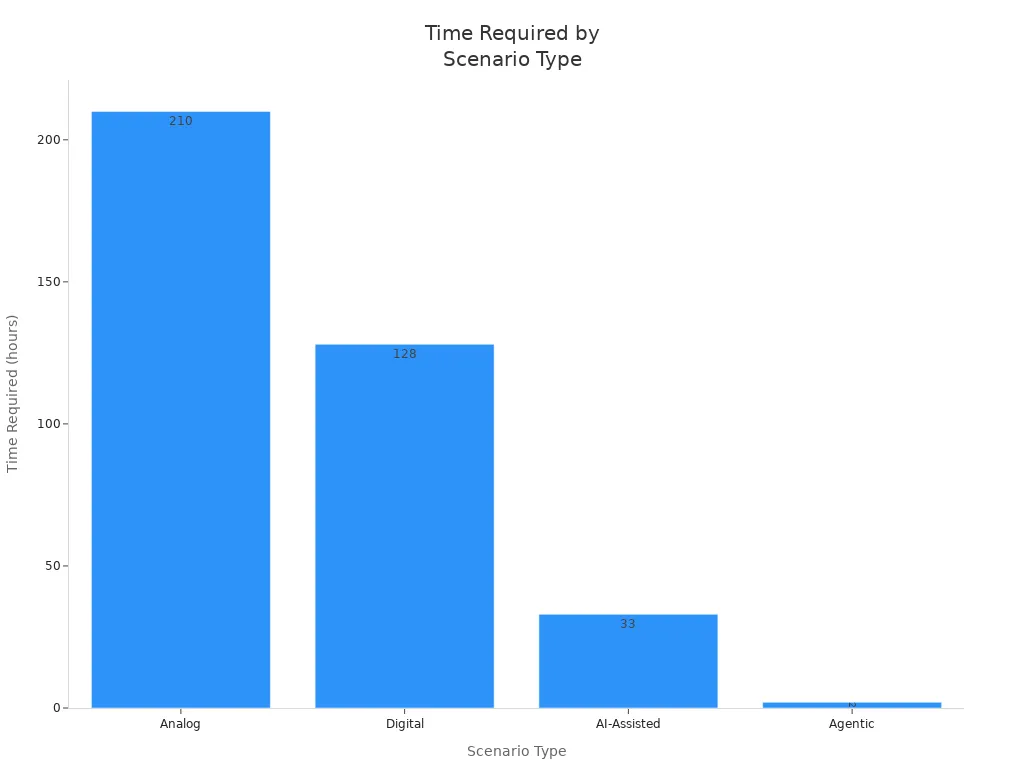
As you can see, the integration of AI and robotics in the electronics industry is not just a trend; it is a necessary evolution. Staying informed about these developments will help you understand how they impact your choices as a consumer or business.
Sustainable Practices in Electronics
Green Electronics
Green electronics focus on reducing environmental impacts throughout the product lifecycle. You can find several effective practices adopted by leading companies in this area:
Companies increasingly utilize renewable energy to optimize power consumption. This shift addresses the significant energy needs of the digital infrastructure sector.
The adoption of bio-based and biodegradable materials is on the rise. For example, Dell Technologies has significantly increased its use of bioplastics in products.
A shift towards modular and repairable product designs is evident. Companies like HMD Global report that a substantial portion of their smartphone sales consists of repairable devices.
You can recognize green electronics products by their key features:
Feature | Description |
|---|---|
Reduced climate impacts | Minimizes environmental harm during production and use |
Energy efficient | Consumes less power during operation |
Environmentally sensitive materials | Reduction or elimination of harmful substances |
Recycled content | Incorporates materials that have been recycled |
Designed for longevity | Built to last longer and be easily repaired |
Upgradeable | Allows for enhancements without complete replacement |
Recycling options | Provides environmentally sound disposal methods |
Recyclable packaging | Uses packaging that can be recycled easily |
The industry is moving towards greener smart factories. These factories utilize cleaner production technologies and renewable energy sources. This approach helps companies reduce their carbon footprint.
Circular Economy Strategies
Circular economy strategies aim to extend product life and minimize waste. You can see several key strategies being implemented in the electronics industry:
Design for longevity and repairability
Modular design
Facilitating recycling and component recovery
Sustainable material sourcing
Product life extension
Circular business models such as leasing and trade-in programs
The global market value of recycled electronics components is estimated at USD 43.2 billion in 2025. It is projected to grow to USD 147.9 billion by 2035, representing a significant increase. This growth highlights the importance of sustainable practices in the electronics industry.
By embracing these sustainable practices, you contribute to a healthier planet while enjoying innovative and responsible products.
Emerging Technologies
AI Edge Computing
AI edge computing is transforming how devices process data. This technology allows devices to analyze information locally, which offers several benefits:
Benefit | Description |
|---|---|
Low Latency | Edge AI enables real-time processing, reducing delays. |
Privacy | Local processing minimizes data transmission, enhancing security. |
Reduced Bandwidth Requirements | Only essential insights are sent, lowering network congestion. |
Reliability | Edge AI operates independently, ensuring continuous functionality even during outages. |
Energy Efficiency | Distributing processing across devices can lower energy consumption compared to centralized systems. |
In 2024, AI edge computing will significantly impact device performance. You will experience real-time decision-making, especially in applications like autonomous vehicles. Local data processing allows for immediate responses, enhancing responsiveness. This technology also improves data privacy by minimizing exposure to potential breaches.
Semiconductor Innovations
The semiconductor industry is witnessing remarkable advancements. In 2024, you can expect innovations such as:
Advanced Packaging Techniques: Techniques like 3D stacking and wafer-level packaging enhance performance and efficiency.
AI Integration: AI is becoming integral to semiconductor devices, impacting sectors like autonomous vehicles and healthcare.
New Materials: Innovative materials, such as amorphous indium oxide, improve energy efficiency in microelectronics. These materials allow for stacking active components, reducing energy loss during data transmission.
The semiconductor market is projected to grow significantly, valued at approximately $530 billion in 2024. It is expected to exceed $1 trillion by 2030, driven by global investments in new fabrication facilities. This growth highlights the importance of semiconductor innovations in shaping the future of electronics.
By staying informed about these emerging technologies, you can better understand their impact on your devices and the broader electronics landscape.
In summary, the electronics industry is evolving rapidly. Key trends include:
5G networks enhancing connectivity and speed.
AI and automation transforming manufacturing processes.
Sustainability becoming a priority for consumers and companies alike.
You should stay informed about these trends. Consider collaborating with industry associations for guidance. Engaging with other companies can also help you share knowledge and resources. Remember, the rise of smart homes and advancements in technologies like augmented reality will shape future markets. By keeping up with these developments, you can make informed decisions that align with your values and needs.
FAQ
What is 5G technology?
5G technology is the fifth generation of mobile networks. It offers faster speeds, lower latency, and improved connectivity for devices. This technology enhances user experiences in smart homes and supports the growth of IoT applications.
How does AI impact manufacturing?
AI optimizes manufacturing by predicting equipment failures, improving supply chain efficiency, and enhancing product quality. It helps manufacturers reduce downtime and waste, ensuring timely delivery of products to you.
What are green electronics?
Green electronics focus on minimizing environmental impacts throughout a product's lifecycle. They use renewable energy, eco-friendly materials, and designs that promote repairability and recyclability, aligning with sustainable practices.
What is edge computing?
Edge computing processes data closer to the source rather than relying on centralized servers. This approach reduces latency, enhances privacy, and lowers bandwidth requirements, making devices more efficient and responsive.
Why are semiconductors important?
Semiconductors are essential components in electronic devices. They enable the functionality of everything from smartphones to computers. Innovations in semiconductor technology drive advancements in various industries, including automotive and healthcare.
See Also
Key Developments Influencing Analog IC Sector By 2025
New Innovations Driving Automotive-Grade Chip Advancements
Current Innovations in IGBT Tech for Electric Cars
Proven Approaches to Overcome Electronic Component Shortages