The internal structure of pyroelectric human body sensors
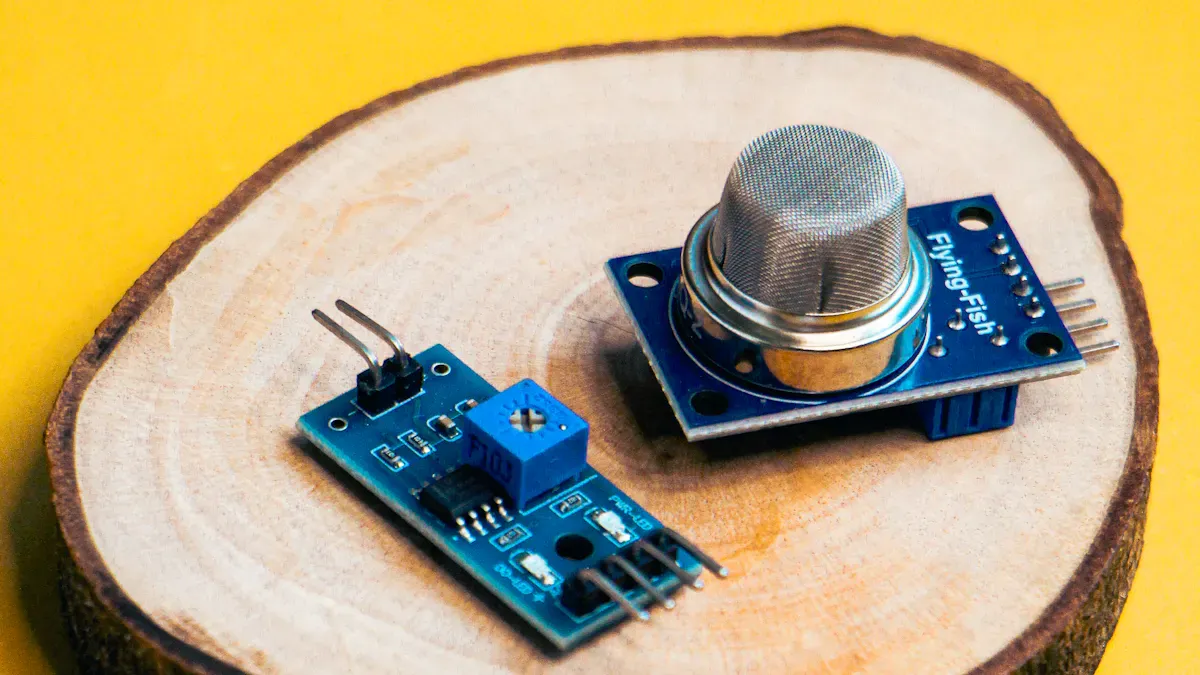
Pyroelectric human body sensors are very important due to their internal structure, which allows them to detect when people are present and moving. These sensors react to changes in infrared radiation emitted from the human body. They are useful in many areas, such as security systems and smart homes. The worldwide market for these sensors is expected to grow more than 10% each year for the next five years. Learning about the internal structure of how these sensors work helps you understand their uses in healthcare and other fields.
The Pyroelectric Effect
Definition and Principles
The pyroelectric effect is when some materials make electricity when their temperature changes. This happens in special crystals like lithium tantalate and modified lead zirconate titanate ceramics. When these materials get hotter or cooler, they create equal and opposite charges at both ends. This change in charge leads to a shift of charge centers inside the crystal. This shift causes measurable voltage or charge signals on the surfaces of the crystal.
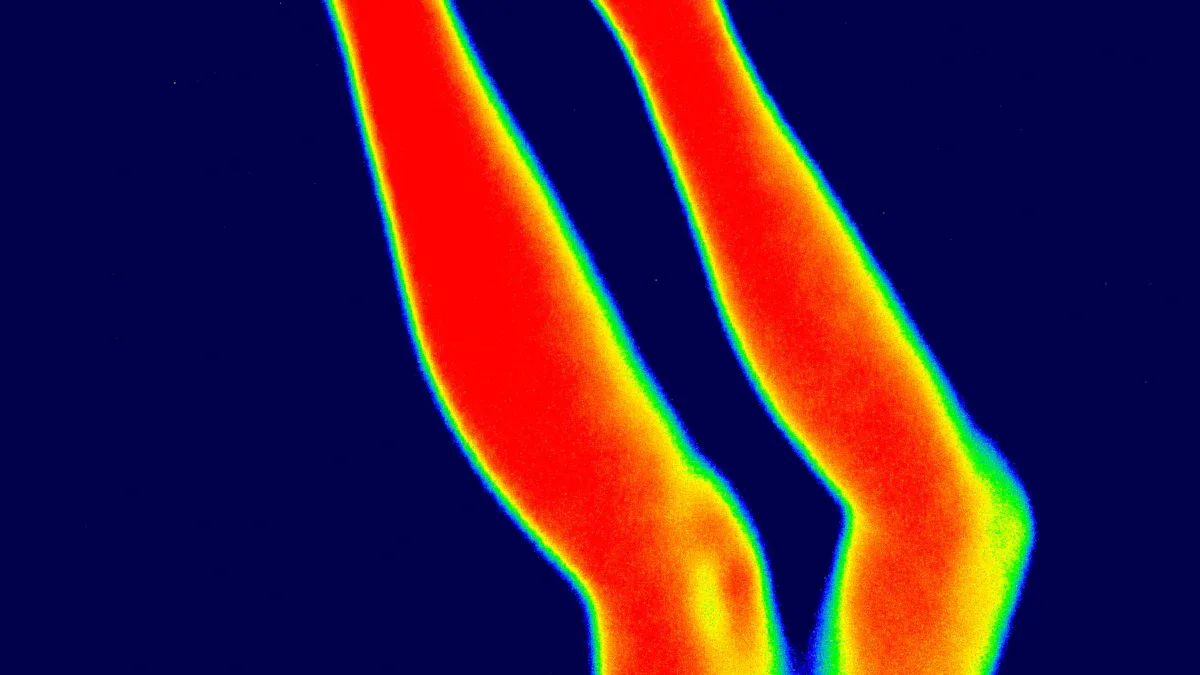
Knowing about this effect is important for infrared pyroelectric sensors. These sensors can find the infrared radiation that people give off. When someone walks into the detection area, the temperature change creates an electrical output. This output helps the sensor know when a person is present.
Signal Generation
Pyroelectric sensors make electrical signals when the temperature changes because of a person nearby. Here’s how it works:
Mechanism | Description |
|---|---|
Voltage Generation | The pyroelectric material creates a voltage difference when the temperature changes. |
Surface Charge | A pyroelectric sensor makes a surface electric charge when it sees infrared radiation. |
Charge Measurement | Changes in radiation hitting the crystal change the amount of charge, which can be measured by a Field Effect Transistor (FET). |
Polarization Change | Ferroelectric materials show spontaneous electrical polarization that changes with temperature, which can be seen as an electrical signal. |
Capacitor Formation | Electrodes on opposite sides of the material create a capacitor, which makes voltage when the polarization changes. |
Signal Production | The sensor sends out an electrical signal only when the temperature changes, showing a change in incoming radiation. |
These processes help the sensor react to movement instead of just being there. When a moving person changes the polarization charges on the sensor's capacitors, the sensor makes electrical signals. This feature helps the sensor ignore interference from visible light and most infrared sources, making sure it accurately detects human movement.
Internal Structure of Sensors
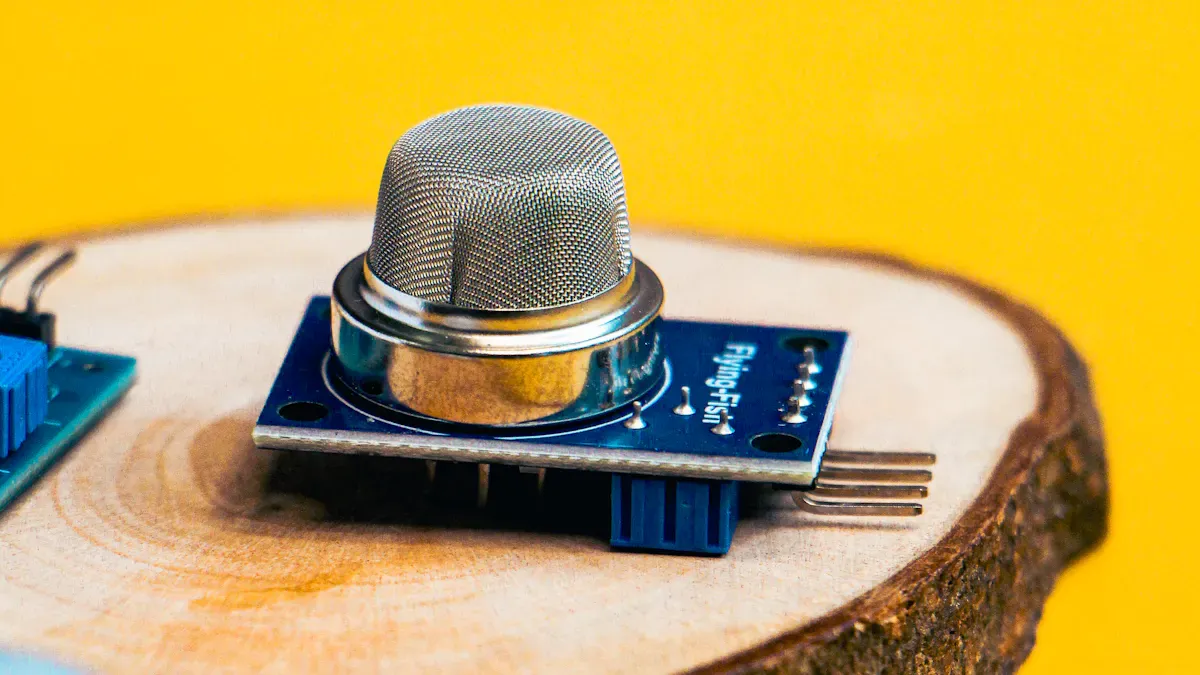
Knowing how pyroelectric sensors are built is important. It helps us understand how they work well. Each part is key to the sensor's ability to notice people and their movements.
Detection Element
The detection element is the main part of the sensor. It usually has a pyroelectric material, like lithium tantalate or triglycine sulfate. This material makes an electrical charge when the temperature changes. The thickness of this part affects how sensitive and accurate the sensor is. Studies show that thinner resonant absorbers improve performance. They help the sensor better detect infrared radiation and tell different types apart. A good detection element can catch the infrared radiation from the human body, which leads to more precise readings.
Electrodes
Electrodes are important for collecting the electrical charge from the detection element. They come in different designs, each with its benefits. Here’s a quick look:
Type of Sensor | Advantages |
|---|---|
Single Element Sensors | Simple design, lower cost, good for basic detection tasks where some mistakes are okay. |
Dual Element Sensors | Good for motion detection, cancels out steady temperature changes, strong performance, cost-effective. |
Quad Element Sensors | Better sensitivity, improved direction detection, good for advanced uses, more complex and costly. |
Integrated Modules | User-friendly for beginners, combines parts for easier setup, less room for customization. |
The type of electrode material also affects how well the sensor works. Common materials include silver for good conductivity and conductive polymers for temperature sensing. Each material has special features that make the sensor stronger and more useful.
Optical Filter
The optical filter is another key part of the sensor. It lets only certain infrared radiation wavelengths (8–14 μm) reach the sensor. This filter blocks visible light and other things that can cause problems, like sunlight. By doing this, it makes the sensor more accurate and cuts down on false alarms. The filter makes sure that only important infrared signals, especially those from human bodies, are detected. This selectivity is crucial for keeping the sensor reliable in different settings.
Sensor Characteristics
Sensitivity and Response
Sensitivity and response are very important for pyroelectric sensors. These features show how well the sensor notices changes in infrared radiation. Several design factors affect these features:
The pyroelectric coefficient changes when the temperature changes.
The heat capacity of the sensor changes with temperature.
The dielectric constant of the material impacts capacitance.
The reflectivity of electrodes changes with temperature.
The table below shows how sensitivity acts at different temperature ranges:
Temperature Range | |
|---|---|
300–200 K | Slight decrease |
200–20 K | Increase |
20–4 K | Abrupt drop |
Knowing these behaviors helps you see how temperature affects sensor performance. For example, when the temperature drops from 300 K to 200 K, sensitivity goes down a little. But as it gets colder to 20 K, sensitivity goes up, then drops quickly below 4 K.
Temperature Range
The normal working temperature for pyroelectric human body sensors is close to human body temperature, which is about 37 °C (or 98 °F). This range is important because the sensors are made to detect heat from the human body.
When you think about temperature changes, you can see how they affect the accuracy and reliability of these sensors. Here are some key points:
Sensitivity of PVDF pyroelectric sensors changes with temperature:
300–200 K: slight decrease in sensitivity.
200–20 K: sensitivity increases.
20–4 K: sharp drop in sensitivity.
The pyroelectric coefficient is highest at temperatures around 14–60 K, which affects how well the sensor works.
Changes in heat capacity and dielectric constant also change how the sensor responds to temperature changes.
By knowing these characteristics, you can better understand how pyroelectric sensors work in different uses, making sure they stay reliable and effective in detecting people.
Applications of Pyroelectric Sensors
Security Systems
Pyroelectric sensors are very important for security systems. They can automatically find out if a person is nearby. This helps keep an eye on places better. Here are some main uses:
Automatic perception of human presence: These sensors know when someone walks into a monitored area.
Automatic lighting control: They can turn on lights when they see movement, which makes things safer.
Automatic detection in smart homes: You can put these sensors at doors and hallways to set off alarms or start video recording.
Putting infrared pyroelectric sensors in different spots can make security better. They can turn on alarms and monitoring devices when they notice movement.
Smart Home Automation
In smart homes, pyroelectric sensors help save energy and make things more comfortable. They help run different systems automatically, making your home smarter. Here are some ways they help:
Role in Smart Home Automation | Description |
|---|---|
These sensors allow lights to turn on automatically based on who is there, saving energy. | |
Intelligent HVAC systems | They improve heating and cooling by sensing people, making it more comfortable and efficient. |
You can trust these sensors to work well. They use less power than many other types, which is great for saving energy.
Healthcare Monitoring
In healthcare, pyroelectric sensors have special uses. They change heat into electrical energy using the pyroelectric effect. This effect depends on temperature changes. Here are some ways they are used:
They capture energy from human movements, especially when muscles contract.
They track metabolic processes that create heat, giving useful information for health checks.
These sensors can make wearable healthcare devices better, making them more efficient and effective.
Challenges in Sensor Design
Environmental Sensitivity
Environmental factors can greatly affect how well pyroelectric human body sensors work. You need to think about things like distance, body type, how fast a person moves, and the sensor's features. These factors can change how well the sensors detect people. Knowing both big and small influences on sensor performance is important for good design.
To reduce environmental sensitivity, manufacturers use several smart strategies:
Vacuum packaging helps keep heat from escaping.
Specialized substrate materials help keep heat away.
Integrated optical elements, like filters and concentrators, improve detection.
MEMS-based fabrication makes sensors smaller while keeping sensitivity.
Hermetic sealing protects sensitive parts from outside factors.
Innovative heat sink designs help keep temperatures steady.
These strategies make sensors more reliable in different situations, ensuring they work well in real life.
Calibration Issues
Calibration is a big challenge for makers of pyroelectric human body sensors. The complex nature of sensor calibration makes it hard to fit these sensors into current systems. Also, the lack of standard rules in different industries makes it even tougher. This can lead to longer development times and higher costs.
To make sure calibration is accurate, manufacturers often use different methods:
Description | |
|---|---|
Artificial Neural Networks (ANN) | Used for self-calibration and best response in smart sensors. |
Adaptive Network-Based Fuzzy Inference Systems (ANFIS) | A method that helps improve calibration processes. |
Radial Basis Function (RBF) Neural Networks | Specifically used for calibrating sensor groups, needing complex training. |
By tackling these calibration issues, you can make pyroelectric sensors more effective and reliable in real-world uses.
In conclusion, pyroelectric human body sensors are very important in today's technology. You can see them used in many areas, such as:
Security: They are key parts of smart motion detectors.
Healthcare: They help with safe thermal imaging and health checks.
Consumer Electronics: They allow devices to recognize hand movements.
Industrial Monitoring: They are essential for spotting flames and checking the environment.
Knowing how these sensors are built helps you understand how they function. This understanding can lead to new improvements in sensor technology, making them better at finding people and their movements.
See Also
Understanding Temperature Sensor Chips And Their Main Characteristics
Exploring The Functions And Applications Of Photodiode ICs
An Overview Of Digital Serial Temperature Sensor Technology
Evaluating Similar Microchips For Identifying Pets Effectively
Key Factors That Differentiate ON Semiconductor Chips From Others