Exciting Innovations in Electronics You Need to Know
Exciting advancements in news electronics are shaping your daily life and industries. Innovations like quantum computing, wearable devices, and AI integration are transforming how you interact with technology. For instance, the global consumer electronics market, valued at USD 864.73 billion in 2025, is projected to reach USD 1,756.39 billion by 2034, growing at a CAGR of 8.38%. This growth reflects the rise of connected smart devices and an increased focus on energy efficiency. With AI-powered smart homes and wearable electronics enabling health monitoring, you can experience enhanced convenience and efficiency like never before.
Key Takeaways
Quantum computing uses qubits to solve complex problems faster than traditional computers, revolutionizing industries like finance and healthcare.
Wearable technology has evolved to include advanced devices that monitor health metrics, promoting better fitness and wellness.
AI integration in smart homes automates tasks, enhances security, and improves energy efficiency, making daily life more convenient.
5G technology significantly boosts data transfer speeds, enabling seamless connectivity for smart devices and enhancing user experiences.
The Internet of Things (IoT) connects billions of devices, improving efficiency in homes and cities while also raising security concerns.
Quantum Computing
Overview of Quantum Technology
Quantum computing represents a significant leap from classical computing. It uses the principles of quantum mechanics to process information. Unlike classical computers that rely on bits, quantum computers utilize qubits. Qubits can exist in multiple states at once due to a property called superposition. This allows quantum systems to perform many calculations simultaneously, greatly increasing computational speed for specific problems.
Here’s a quick comparison between classical and quantum computing:
Feature | Classical Computing | Quantum Computing |
|---|---|---|
Data Representation | Uses qubits (0, 1, or both simultaneously) | |
Processing Power | Increases linearly with transistors | Increases exponentially with qubits |
Key Properties | Predictable and replicable data processing | Superposition and entanglement enable parallel processing |
Calculation Capability | Performs N calculations simultaneously | Performs up to 2^N calculations simultaneously |
Applications in Industry
Quantum computing is not just a theoretical concept; it has real-world applications across various industries. Here are some key areas where quantum technology is making an impact:
Finance: Companies like IBM are using quantum systems to optimize financial transactions. This technology can solve complex optimization problems, potentially saving millions in costs.
Healthcare: Quantum computing can transform drug discovery. By speeding up molecular simulations, researchers can identify drug candidates faster than ever before.
Logistics: Quantum algorithms improve routing and scheduling in supply chains. This leads to significant cost reductions and efficiency gains.
Energy: Quantum computing helps in optimizing energy distribution and improving grid management.
Materials Science: Researchers use quantum models to discover new materials with unique properties.
Recent advancements in quantum computing include integrating AI to optimize quantum systems and enhance error correction. Companies like Google and Microsoft are leading the charge, with Google demonstrating quantum supremacy through its Sycamore processor. As the technology matures, the potential economic impact could reach $1.3 trillion by the 2030s, particularly in pharmaceuticals and finance.
However, challenges remain. Error correction is crucial due to the sensitivity of quantum computers to noise. Scalability and hardware development also pose significant hurdles. Despite these challenges, the future of quantum computing looks promising, with ongoing research paving the way for broader adoption.
Wearable Electronics
Latest Trends
Wearable electronics have rapidly evolved, offering exciting innovations that enhance your health and fitness. Here are some of the most significant trends in 2024:
Wearable Technology: Devices like fitness trackers, smartwatches, heart rate monitors, and GPS trackers help you monitor various health metrics.
Worksite Health Promotion: Companies implement programs to boost employee wellness through work-related initiatives.
Fitness Programs for Older Adults: Tailored interventions address the unique needs of the aging population.
Recent advancements in materials, such as bioresorbable electronics and gallium-based liquid metals, are paving the way for innovative devices. Bioresorbable electronics dissolve after use, reducing the need for surgical removal. Liquid metal–polymer conductors enable flexible and conformal bioelectronics that adapt to your body’s shape.
Memory Assistance Devices
Memory assistance devices are gaining popularity, especially among older adults with cognitive impairments. These devices provide cognitive support without being intrusive. Their discreet nature allows for seamless integration into daily routines, enhancing user experience. Continuous monitoring capabilities enable the collection of data on cognitive health, facilitating early detection of cognitive decline.
Some popular memory assistance devices include:
Memoro: This AI memory assistant captures audio through a bone conduction headset. It transforms everyday conversations into structured memories, allowing you to recall details via natural language voice queries. Memoro also provides proactive reminders based on your speech and offers end-of-day summaries of conversations.
While these devices show promise, challenges remain. Many rely on static feedback mechanisms, which may not provide actionable insights. Usability concerns, such as comfort and data accuracy, can affect adherence rates. The effectiveness of these devices often hinges on intuitive designs that accommodate varying levels of cognitive ability.
As wearable technology continues to advance, you can expect even more innovative solutions that enhance your health and well-being.
AI in Smart Homes
Smart Devices
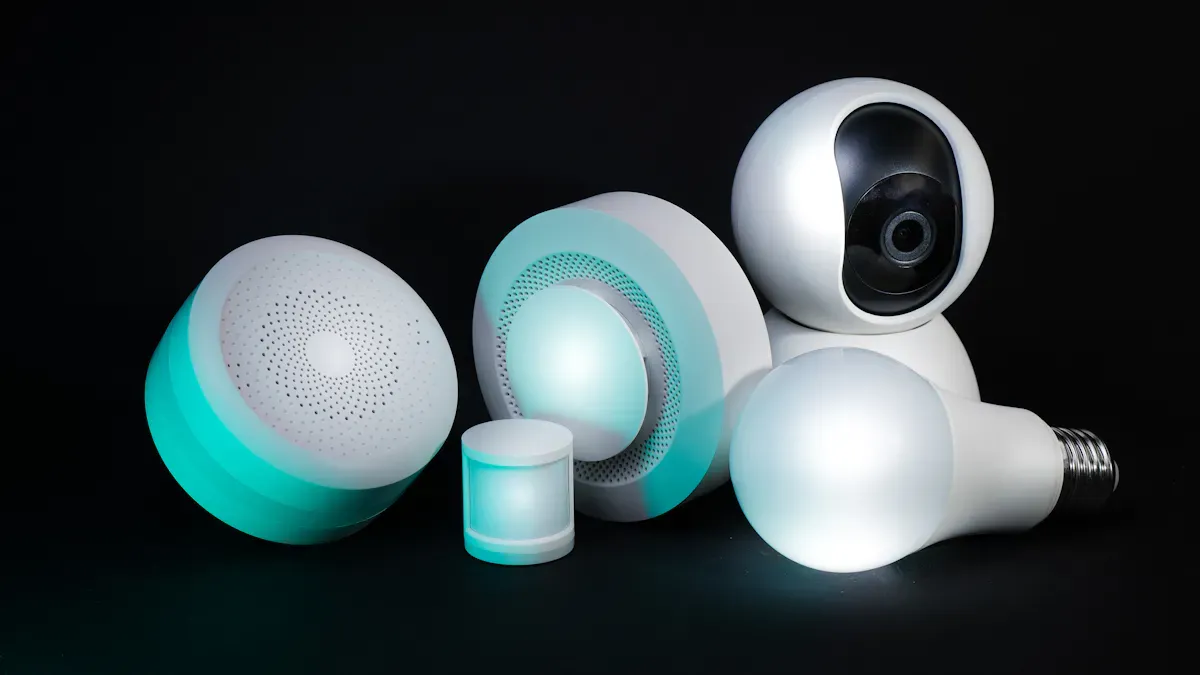
In 2024, AI has transformed smart home devices into powerful tools that enhance your daily life. Modern AI-powered smart home hubs have evolved beyond simple voice commands. They now learn your routines, predict your needs, and coordinate connected devices. This creates an ambient computing environment that feels intuitive and responsive.
For example, AI-enhanced security systems use advanced neural networks. These systems can distinguish between harmless events and potential threats. They reduce false alarms and provide context-aware alerts. You will receive notifications when your children arrive home or when packages are delivered. In the kitchen, AI appliances recognize food types and recommend cooking settings. They can even visually monitor your food to ensure perfect results. AI nutritionist devices analyze meals for nutritional content, while smart scales assist with recipe accuracy. This democratizes gourmet cooking and healthy eating, making it accessible to everyone.
Home Automation
Home automation powered by AI offers numerous benefits for energy efficiency and convenience. Smart thermostats adjust heating and cooling based on occupancy and weather conditions. This reduces energy waste and lowers your utility bills. These systems learn your habits and automatically adjust lighting and temperature, providing comfort without extra effort.
Here are some key benefits of AI-driven home automation:
AI-powered smart thermostats optimize energy use based on occupancy.
Predictive maintenance identifies potential device failures early.
Voice-activated assistants provide hands-free control of devices.
AI integration in smart homes not only enhances security but also improves your overall living experience. With AI, your home becomes smarter, more efficient, and personalized to your lifestyle. You can enjoy a seamless blend of technology and comfort, making everyday tasks easier and more enjoyable.
News Electronics: Connectivity Advances
5G Technology
5G technology is revolutionizing how you connect and interact with devices. This new generation of wireless technology significantly enhances data transfer speeds. Here are some key impacts of 5G:
Faster Downloads: You can download large files much quicker than before. For example, a full HD movie takes only 3.6 seconds to download with 5G, compared to 26 hours on 3G.
Smart Devices: 5G supports a new wave of smart devices. This technology transforms how you capture, store, and share digital memories.
Increased Connectivity: 5G can connect up to one million devices per square kilometer. This capability facilitates advancements in IoT, autonomous vehicles, smart cities, and augmented reality.
With 5G, you can enjoy instant downloads and seamless gaming experiences with latency as low as 1 millisecond. This technology is also making waves in sectors like entertainment and education. For instance, augmented and virtual reality platforms are becoming essential in retail, offering virtual fitting rooms and immersive product demonstrations.
Internet of Things (IoT)
The Internet of Things (IoT) is expanding rapidly. Currently, there are about 6.7 billion IoT devices connected worldwide. By 2030, this number is projected to reach approximately 24.1 billion. This growth indicates a major expansion in the IoT market.
IoT devices play a crucial role in smart cities and homes. Here are some significant applications:
Energy Management: Microgrids allow homes to self-generate and share energy.
Smart Meter Technology: This technology provides detailed energy usage reports, improving efficiency.
Traffic Management: Embedded sensors help manage traffic flow and enhance public safety.
However, the rise of IoT devices also brings security concerns. Issues like lack of standardization and inadequate security features can make devices vulnerable to attacks. As you embrace these innovations, staying informed about security measures is essential.
With the advancements in 5G and IoT, the future of connectivity looks promising. You can expect a more connected, efficient, and intelligent world.
The innovations in electronics, such as quantum computing, wearable technology, AI in smart homes, and connectivity advances, are reshaping our world. Here are some key takeaways:
Innovation | Key Takeaway |
|---|---|
Quantum Computing | Utilizes quantum mechanics for faster problem-solving, showing potential to outperform supercomputers. |
Smart Home Integration | IoT enables easy control of home systems, enhancing convenience and energy efficiency. |
Wearable Tech Evolution | Transition from basic trackers to advanced smart devices that promote health and activity. |
Connectivity Advances | 5G and 6G networks enhance data transfer speeds, supporting IoT and transforming connectivity. |
As these technologies evolve, you can expect a more personalized and efficient experience. Stay informed about these advancements and consider how you can integrate them into your daily life. Embrace the future of technology and enjoy the benefits it brings! 🌟
FAQ
What is quantum computing?
Quantum computing uses qubits to process information. Unlike classical computers, quantum computers can perform multiple calculations at once. This capability allows them to solve complex problems much faster than traditional systems.
How do wearable devices improve health?
Wearable devices track your health metrics, such as heart rate and activity levels. They provide real-time feedback, helping you make informed decisions about your fitness and overall well-being.
What are the benefits of AI in smart homes?
AI enhances smart homes by automating tasks and improving energy efficiency. Smart devices learn your habits, making your home more comfortable and secure while reducing energy costs.
How does 5G technology impact connectivity?
5G technology offers faster data transfer speeds and lower latency. This advancement supports more connected devices, enabling innovations in IoT, smart cities, and enhanced user experiences.
What is the Internet of Things (IoT)?
The Internet of Things (IoT) connects everyday devices to the internet. This network allows devices to communicate and share data, improving efficiency in homes, cities, and industries.
See Also
Key Developments Influencing Analog Integrated Circuits By 2025
Breakthroughs Transforming Local Memory Chip Production By 2025
New Developments in Automotive Quality Chip Technologies