Core Performance Parameters of Photodiodes
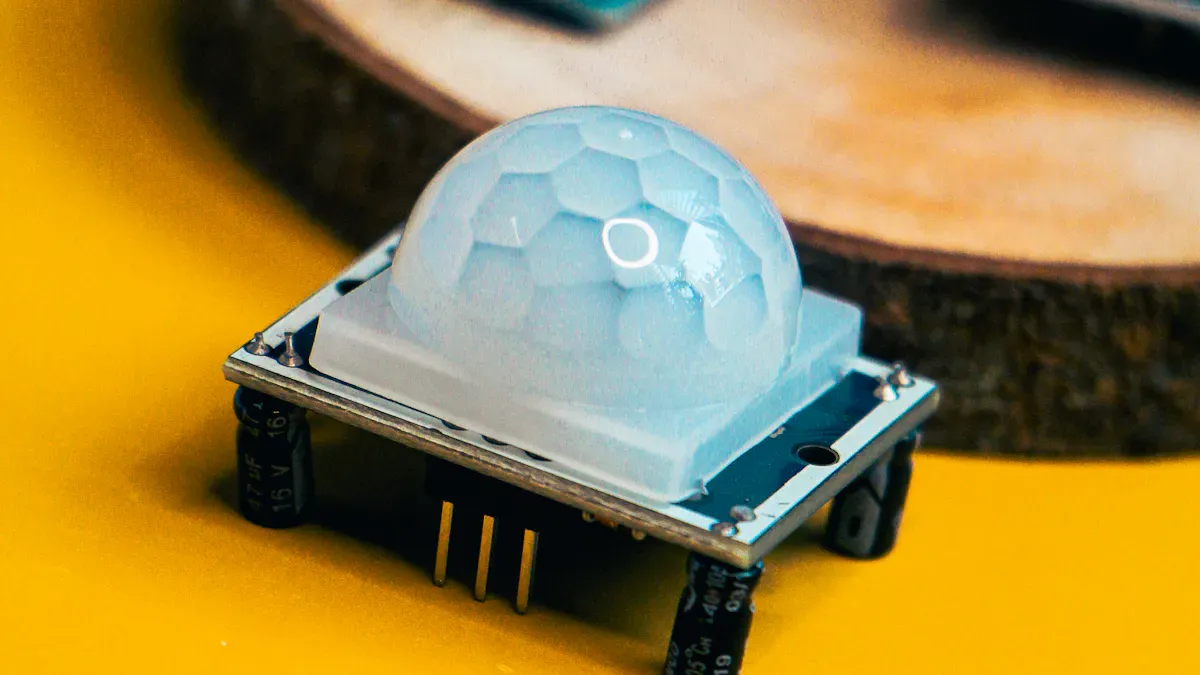
A photodiode is a device that reacts to light, converting it into electrical signals. These devices are crucial in various applications, including CD players, smoke detectors, and medical tools like pulse oximeters. Understanding the core performance parameters of photodiodes enables users to evaluate their effectiveness in real-world scenarios.
Core Performance Parameters Overview

Photodiodes have important performance parameters. These parameters show how well they work. Knowing these details helps in choosing the right photodiode for different uses. Here are the main performance parameters:
Parameter | Definition |
|---|---|
This is the amount of photocurrent created compared to the light power hitting it. It is shown in A/W. It can also be called quantum efficiency. This is the number of carriers made by light compared to the number of photons. | |
Dark Current | This is the current in the photodiode when there is no light. It includes current from background light and the saturation current of the semiconductor. This can create noise in optical communication systems. |
Response Time | This is how long it takes for the detector to react to light. It depends on the resistance and capacitance of the photodiode and its circuits. This affects how fast signals can be sent in communication systems. |
Noise-Equivalent Power | This is the smallest amount of light power needed to create photocurrent. It equals the rms noise current in a 1 hertz bandwidth. This shows the least power the photodiode can detect. |
These parameters are very important for how well photodiodes work in real life. For example, responsivity is key for finding weak light signals. High responsivity means even small amounts of light can create a current.
Noise features also affect how well they work. A low dark current reduces noise, improving the signal-to-noise ratio. This is important for clear images and accurate signal detection in areas like medical imaging.
Timing resolution is another key point. It helps with exact measurements in cases needing precise time-of-flight and coincidence detection. Operational stability makes sure the performance stays steady over time. This is crucial for reliable imaging in medical uses.
Parameter | Impact on Effectiveness |
|---|---|
Responsivity | This decides the output current for each unit of light power. It is key for finding weak light signals. |
Noise Characteristics | This changes the signal-to-noise ratio, which is important for clear images and accurate signal detection. |
Timing Resolution | This is vital for cases needing exact measurements. It allows for precise time-of-flight and coincidence detection. |
Operational Stability | This keeps performance steady over time, which is important for reliable imaging in medical uses. |
By knowing these core performance parameters, users can choose the best photodiodes for many uses, from optical communication to medical devices.
Shunt Resistance and Dark Current
Shunt Resistance
Shunt resistance is very important for how photodiodes work. It is the resistance across the photodiode when it is reverse-biased. A high shunt resistance lowers leakage current. This is good because leakage current can hurt performance. For example, a photodiode with a shunt resistance of 5E8 Ohms can cut dark leakage current down to just 2 nA. This low leakage current helps keep a good signal-to-noise ratio. It allows the photodiode to find weak light signals well.
Parameter | Value |
|---|---|
Dark Leakage Current | 2 nA |
Shunt Resistance | 5E8 Ohms |
Responsivity | 0.5 A/W |
Bandwidth | 1 Hz |
Dominant Noise Component | Shot Noise |
Operating Mode | Reverse Bias |
Noise Current Contribution | Johnson Noise |
Dark Current
Dark current is another key measure for photodiodes. It is the small electric current that flows even without light. This current can change the signal-to-noise ratio, especially in low-light situations. Temperature affects dark current levels. When temperature goes up, dark current usually increases. This can hide the current made by incoming light.
Dark current reduces the dynamic range and sensitivity of photodiodes. Looking at the ratio of dark current to sensitivity helps us understand photodiode performance. This shows the least optical power needed for the photocurrent to be more than the dark current. This is important for keeping a good signal-to-noise ratio.
Reducing dark current is key for better photodiode performance, especially in low-light cases. By knowing about shunt resistance and dark current, users can better assess the core performance parameters of photodiodes for their needs.
Responsivity and Quantum Efficiency
Responsivity
Responsivity is an important performance measure for photodiodes. It shows how well a photodiode changes light into electrical current. This measure is given in amperes per watt (A/W). A higher responsivity means the photodiode makes more current from the same amount of light.
To find responsivity, researchers use special tools and steps. The table below explains the measurement method:
Measurement Method | Description |
|---|---|
Equipment Used | Current preamplifiers, lock-in amplifier, chopped monochromatic light |
Process | Create photocurrent in the device and calibrated photodiode, change to voltage, and calculate responsivity using equations |
Accuracy | Very high accuracy (<±0.1%) because of noise reduction methods |
Spectral responsivity changes with the light's wavelength. Different photodiodes react differently to various wavelengths. For instance, silicon photodiodes work well in the 200-1100 nm range, with responsivity peaking at certain wavelengths. However, silicon becomes clear to light longer than 1100 nm, making it not suitable for those wavelengths. This feature is important for uses like visible light detection, infrared sensing, or UV light measurement.
Quantum Efficiency
Quantum efficiency (Q.E.) is another key measure for photodiodes. It shows how well a photodiode turns light energy into electrical energy, shown as a percentage. Quantum efficiency has two types: external quantum efficiency (EQE) and internal quantum efficiency (IQE).
External Quantum Efficiency (EQE): This measures the number of charges taken out compared to the number of incoming photons at a certain wavelength. EQE is closely linked to responsivity, which shows how well a photodetector changes light into electrical current.
Internal Quantum Efficiency (IQE): This is about how well incoming photons turn into charge carriers inside the photodiode.
The link between quantum efficiency and responsivity is explained by specific equations. Higher quantum efficiency usually means higher responsivity. This connection is important for checking the overall performance of photodiodes.
I-V Characteristics
I-V Curve
The I-V characteristic curve shows how a photodiode works with different bias conditions. When in reverse bias, the depletion region gets wider. This helps the photodiode absorb more photons. As a result, the current output becomes straight with respect to light. The photodiode works like a constant current generator, as long as the reverse-bias voltage stays below the breakdown limit.
Key Points about the I-V Curve:
Reverse bias makes the depletion region wider, helping photon absorption.
The response time improves because of faster carrier movement.
The output is straight with respect to light in reverse bias, while forward bias shows a curved output.
This straightness is important for tasks that need exact measurements. On the other hand, forward bias causes a curved output, making the current-voltage relationship harder to understand.
Breakdown Voltage
Breakdown voltage is the highest reverse voltage a photodiode can take before seeing a big rise in leakage or dark current. This number is important for keeping the device reliable. Going over the breakdown voltage can damage the photodiode.
Temperature also plays a role in breakdown voltage. Higher temperatures can lower the breakdown voltage, affecting performance and lifespan. Knowing about breakdown voltage helps users pick photodiodes that will work well in their specific tasks.
By understanding the I-V characteristics, users can make smart choices about photodiodes. This ensures they select devices that fit their needs well.
Noise and Response Time
Noise-Equivalent Power
Noise-equivalent power (NEP) is an important measure for photodiodes. It shows the light power level where the signal matches the random noise level. This means the signal-to-noise ratio is one. A lower NEP makes photodetectors more sensitive. This helps them find weaker light signals. This is very important in low-light situations.
You can calculate NEP using this formula:
NEP = in/R, where:
in is the root-mean-square noise current.
R is the responsivity of the detector.
For example, if a photodetector has an NEP of 1 pW/√Hz and detects a signal in a bandwidth of Δf = 10 kHz, the optical power needed for a signal-to-noise ratio of one is 100 pW. This ability helps improve signal detection and lowers error rates in communication systems.
Response Speed
Response speed is another key feature of photodiodes. It shows how fast a photodiode can respond to changes in light. Several things affect response speed:
Factor | Description |
|---|---|
Charge Collection Time | This is the time related to terminal capacitance and load resistance. It affects how fast the output signal charges. |
Carrier Transit Time | This is the time it takes for carriers to move through the depletion layer. It is affected by the depletion width and electric field. |
Total Response Time | This is the total of the individual times, where the slowest factor is the most important. |
Knowing these factors helps users choose photodiodes that fit their needs, especially in cases that need quick response times.
Knowing the main performance parameters of photodiodes is important. This helps in picking the right device for different uses. Key factors are responsivity, dark current, and noise characteristics. These factors affect how well photodiodes work in low-light situations and fast applications. Engineers need to think about these points when looking at photodiodes. This ensures they work their best.
See Also
Exploring the Applications and Functions of Photodiode ICs
Key Features and Functions of Temperature Sensor Chips
Fundamentals of Analog IC Design and Its Applications