The core essential difference between PSoC and traditional microcontrollers
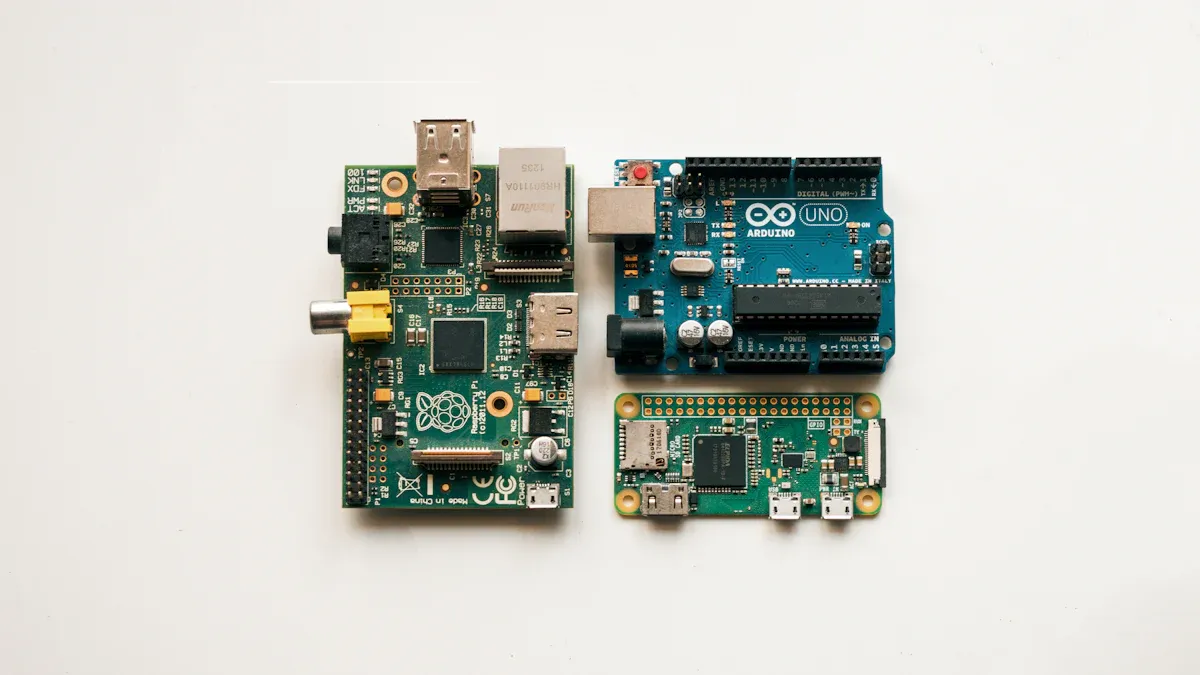
The core essential difference between PSoC and regular microcontrollers lies in their programmability and included features. PSoC devices are very easy to program, capable of handling both analog and digital tasks. They come with built-in features like ADCs and DACs, eliminating the need for extra parts. This integration simplifies the creation of complex systems.
Feature | PSoC Devices | Traditional Microcontrollers |
|---|---|---|
Programmability | Very easy to program with analog and digital tasks | Harder to program |
Integration | Need extra parts | |
Software Development | PSoC Creator has a free design area | Regular IDEs have fixed designs |
Performance | Fast ADCs in new models | Varies a lot, usually not as good |
PSoC Overview
PSoC, which stands for Programmable System-on-Chip, is a big step forward in microcontroller technology. It mixes a microcontroller with programmable analog and digital parts. This lets you make custom solutions for many uses. This flexibility makes PSoC different from regular microcontrollers.
Key Features of PSoC
PSoC devices have several special features that make them easier to use:
Integration: PSoC combines many parts, like ADCs and DACs, into one chip. This cuts down on extra parts, making your design simpler.
Programmability: You can easily program PSoC devices with PSoC Creator, a free design tool. This tool helps you see and set up your design without needing a lot of coding.
Power Domains: The PSoC 4 HV PA has different power domains. This helps it work well at different voltage levels. This feature improves performance and reliability.
Configurable Analog and Digital Blocks
The configurable analog and digital blocks in PSoC give you great design flexibility. Unlike fixed-function microcontrollers, PSoC lets you change your design to fit specific needs. For example, you can set up digital blocks to make state machines or communication modules. This adapts them for mixed-signal uses. This ability gives you the flexibility of an FPGA while keeping the ease of use found in standard microcontrollers. Because of this, you can build complex systems without the limits of traditional designs.
By using these features, you can create new solutions that meet your unique project needs.
Traditional Microcontrollers
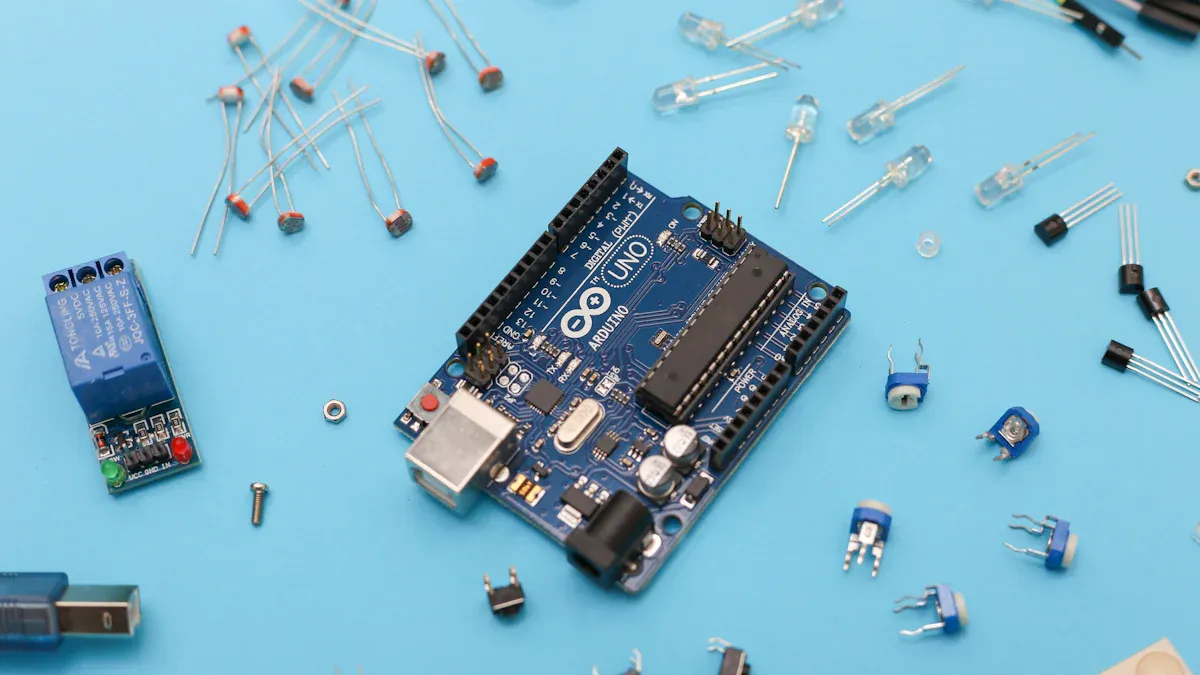
Traditional microcontrollers are important for many embedded systems. They have a processor, memory, and input/output parts all on one chip. Here are some main features of traditional microcontrollers:
Characteristic | Description |
|---|---|
Architecture | Microcontrollers can be simple 4-bit or complex 32-bit and 64-bit. |
Memory | They have volatile memory (RAM) and non-volatile types like ROM, EPROM, EEPROM, or Flash. |
I/O Features | They have separate input/output bits and communication options like UART, I²C, and SPI. |
Peripherals | Common parts include timers, PWM generators, and watchdog timers. |
Clock Generation | They usually have a clock generator, often an oscillator. |
Real-time Response | They need to give quick responses to events, using an interrupt system for handling events. |
Even with their benefits, traditional microcontrollers have limits in flexibility. You might face these challenges:
Fixed combinations of peripherals
Need for extra parts for more features
Hard to change designs without big hardware updates
These limits can raise costs and slow down development. For example, if you want to add a new feature, you may need extra integrated circuits (ICs) or make big changes to the printed circuit board (PCB). This lack of flexibility can make it hard to innovate and change your designs quickly.
Core Essential Difference: Flexibility and Integration
PSoC devices are special because they are flexible and can integrate many features. You can change PSoC to match your project needs. This ability is a big plus compared to traditional microcontrollers, which usually have fixed functions.
Universal Digital Blocks (UDBs)
One important feature that makes PSoC flexible is the Universal Digital Blocks (UDBs). These blocks let you create custom digital connections and logic functions. Here’s what UDBs can do:
Component Type | Description |
|---|---|
Universal Digital Blocks (UDBs) | Configurable blocks for custom digital connections, state machines, and logic functions. |
Serial Communication Blocks (SCBs) | Help with different serial communication methods. |
Timer/Counter/Pulse Width Modulators (TCPWM) | Control timing and signals for various uses. |
With 24 UDBs on the board, you can adjust your design to fit special needs. This kind of customization is not possible with traditional microcontrollers, which usually have fixed parts. Because of this, you might need extra components to get similar features, making things more complex and costly.
Dual-Core Architecture Benefits
Another big benefit of PSoC is its dual-core design. This setup helps improve performance and efficiency. Here’s how dual-core PSoC devices stack up against single-core traditional microcontrollers:
Feature | Dual-Core PSoC Devices | Single-Core Microcontrollers |
|---|---|---|
Audio Processing Speed | Up to 75% faster | N/A |
Energy Consumption | About half compared to competitors | N/A |
Always-On Listening Power | Below 1mW | N/A |
Detection Rate | Over 98% in close-talking situations | N/A |
Development Time | Nearly 50% less time for AI projects | N/A |
The dual-core design lets you run many tasks at once. This is very helpful for jobs needing real-time processing, like handling audio or sensor data. On the other hand, traditional microcontrollers may find multitasking hard, which can slow down performance and make development take longer.
Application Scenarios
PSoC Use Cases
PSoC technology is great for many uses because it is flexible and has built-in features. Here are some common examples:
Consumer Electronics: PSoC is used in touch screens, lighting systems, and health monitors you can wear.
Industrial Automation: PSoC helps with motor controls and sensor hubs, making factories work better.
IoT Applications: You can use PSoC for connecting sensors, processing data, and wireless communication. This makes it perfect for smart devices.
Automotive Systems: PSoC controls lights, entertainment systems, and extra sensors, making cars work better.
The dual-core design lets it do many tasks at the same time. This makes PSoC good for complicated applications.
Traditional Microcontroller Use Cases
Traditional microcontrollers are also important in many areas. Here are some common uses:
Application Type | Description |
|---|---|
Consumer Electronics | Used in smart home gadgets, wearables, and remote controls for user interaction. |
Automotive | Found in entertainment systems and sensor management, making cars safer and more comfortable. |
Medical Devices | Supports portable tools for diagnosis and patient monitoring with reliable performance. |
Industrial Automation | Used for controlling motion and connecting sensors, improving efficiency. |
IoT Devices | Helps with connecting and collecting data in smart sensors and connected appliances. |
While traditional microcontrollers are useful, they often do not have the flexibility and integration that PSoC provides. This main difference can greatly affect your project choices.
Advantages of PSoC
PSoC devices have many benefits that make them special in the microcontroller world. Their unique features improve how they work and offer affordable solutions for different uses.
Enhanced Functionality
PSoC devices help you make processes easier for important development steps, especially in Edge AI applications. Here are some main improvements in functionality:
Neural Processing Unit: PSoC devices use a neural processing unit that increases processing power. This makes performance better, uses less power, and lowers delays.
Scalability: You can build scalable and secure AI-powered systems with PSoC. This flexibility makes them good for many uses, like IoT, industrial automation, and consumer electronics.
Unified Control Systems: PSoC devices give better training options for operators. They let you test scenarios safely, helping you see how systems react without real-world risks.
These features make PSoC devices a strong choice for complex projects, allowing you to create new ideas without the limits of traditional microcontrollers.
Cost-Effectiveness
When looking at costs, PSoC devices are often cheaper than traditional microcontrollers. The table below shows the cost differences between using PSoC and traditional microcontrollers, including extra parts:
Feature/Benefit | PSoC | Traditional Microcontrollers |
|---|---|---|
Integration of components | High (MCU + ASIC capabilities) | Low (Needs extra parts) |
Component count | Lower (Fewer extra parts needed) | Higher (More extra parts needed) |
PCB size | Smaller (Thanks to integration) | Larger (More parts) |
Power efficiency | Better (Built-in functions) | Varies (Depends on extra parts) |
Cost of external components | Reduced (Many built-in) | Higher (Needs more parts) |
Development and manufacturing costs | Lower (Because of integration) | Higher (More parts to handle) |
By combining many functions into one chip, PSoC devices cut down on the need for extra parts. This leads to smaller PCB sizes and lower total costs. You can save money on both development and manufacturing, making PSoC a smart choice for your projects.
In conclusion, PSoC devices have many benefits compared to traditional microcontrollers. They offer:
Feature | PSoC | Traditional Microcontrollers |
|---|---|---|
Yes | No | |
Programmable Routing | Yes | Limited |
Flexibility and Customizability | High | Low |
You can take advantage of their flexibility, ability to customize, and the mix of analog and digital functions. Think about using PSoC for your next project to enjoy these benefits and make your design easier.
Keep in mind, picking the right platform can really affect how well your project does!
FAQ
What is PSoC used for?
PSoC is used in areas that need both analog and digital processing. This includes IoT devices, consumer electronics, and industrial automation.
How does PSoC save costs?
PSoC saves money by combining many functions into one chip. This cuts down on extra parts and makes PCB design easier.
Can I program PSoC easily?
Yes, you can easily program PSoC with PSoC Creator. It has a simple interface for designing and setting up your projects.
See Also
A Comprehensive Guide to Microcontrollers and Flash Memory
Key Distinctions Between Evaluation Boards and Development Boards
Best Ten Microcontrollers for Embedded Systems in 2025
Exploring High-Performance Microcontroller Integrated Circuits
Understanding Real-Time Microcontroller ICs and Their Functionality