Core components needed for a minimal microcontroller system
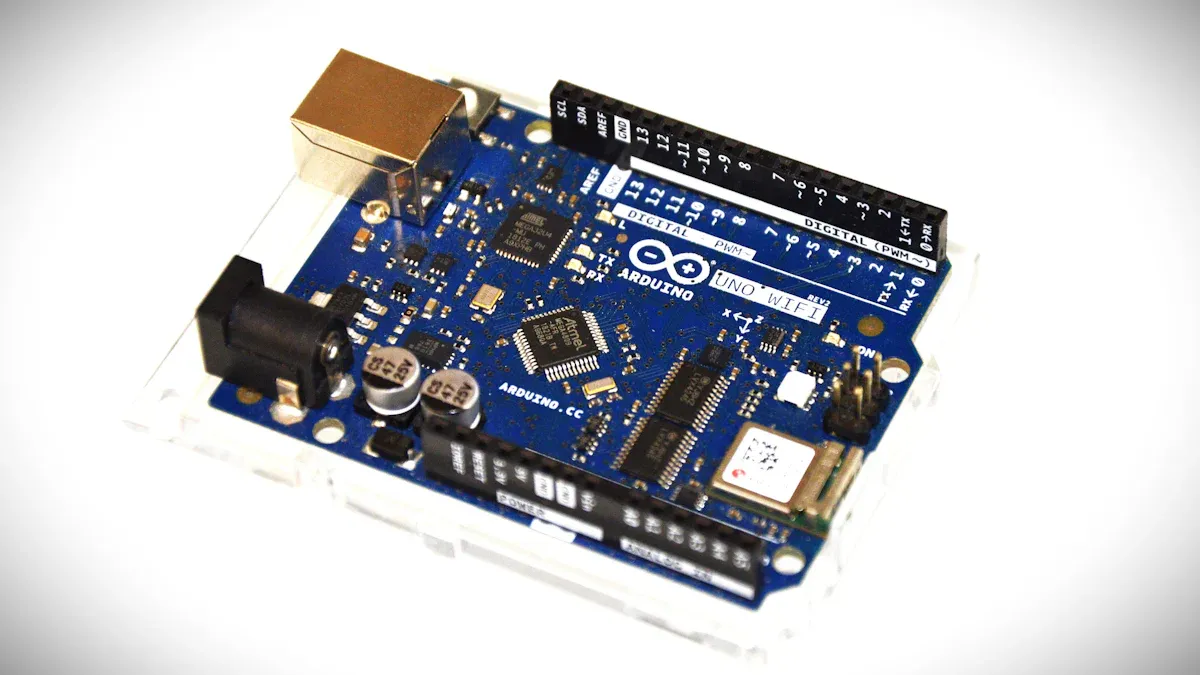
A basic microcontroller system is very important for many electronic devices. You can see these systems in things like home appliances and cars. The core components include the power supply, reset circuit, clock source, boot mode selection, and debugging interface. Each part helps the system work correctly. Knowing these core components can help you design and fix electronic projects better.
Core Components: Power Supply
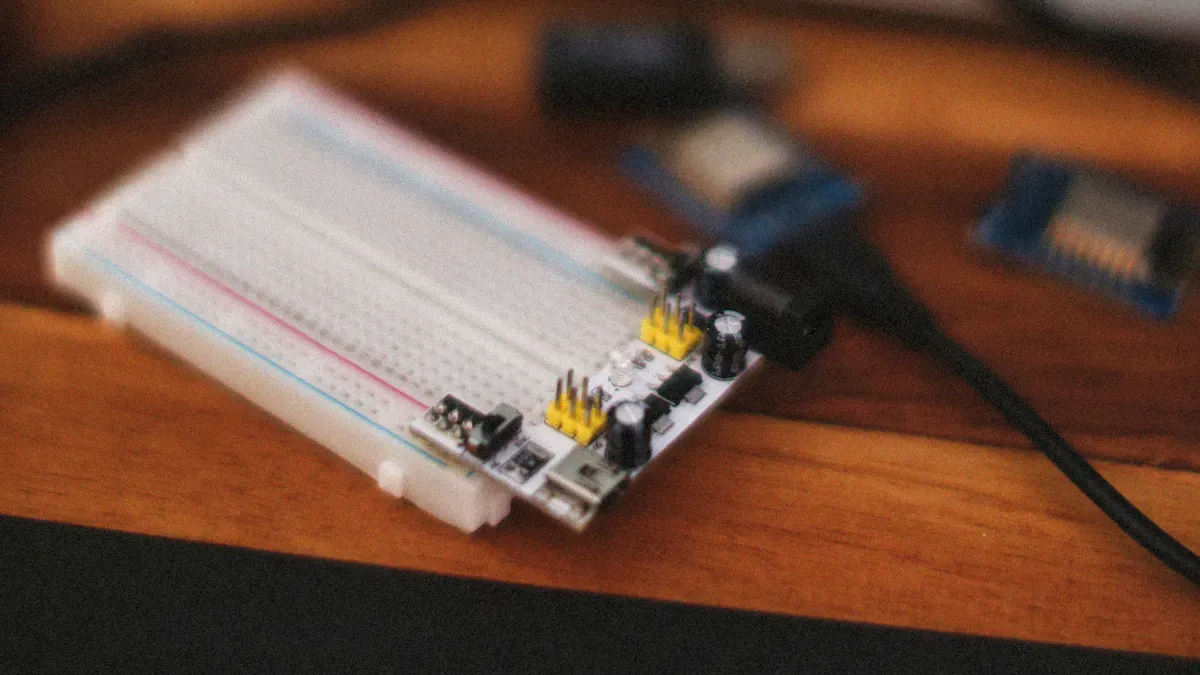
Power Supply Role
The power supply is very important for any microcontroller system. It gives the right voltage and current for the microcontroller to work well. A steady power supply makes sure the microcontroller gets constant energy. This is crucial for good performance. Changes in power can cause problems like electrical overstress, memory issues, and system failures.
To show the usual needs for microcontroller power supplies, look at this table:
Component | Voltage Requirement | Current Requirement |
|---|---|---|
Microcontroller | 3.3V | N/A |
Power Source | 5V | N/A |
Voltage Regulator | 3.3V output | N/A |
Power Supply Configuration
Setting up the power supply correctly can greatly change how your microcontroller works. Here are some important things to think about:
Decoupling Capacitors: These parts are key for making the power supply stable. They store energy locally to help with voltage drops when current needs change. They also filter out high-frequency noise, keeping voltage levels steady for the microcontroller. When an integrated circuit changes states, it needs a quick burst of current. The decoupling capacitor gives this instantly, smoothing out voltage changes.
Recommended Configurations: A good power supply circuit has many parts. For example, using a 5V USB power source as the input voltage is common. A voltage regulator, like the AMS1117-3.3, lowers this voltage to 3.3V for the microcontroller. Other parts like VDDA and VREF+ help distribute power properly to analog modules.
Impact on Performance: A good power supply setup improves reliability. Methods like adaptive voltage scaling help save energy and reduce heat stress. This changing of supply voltage matches processing needs, ensuring efficient operation.
Core Components: Reset Circuit
Reset Function
The reset circuit is very important for how the microcontroller works. It makes sure the microcontroller starts correctly when you turn on the power. If the voltage goes too low, the reset circuit will reset the microcontroller. You can also reset the microcontroller by hand if you need to. These functions help keep everything running smoothly and stop problems like strange behavior or lost data.
Here are the main jobs of a reset circuit:
Power-On Reset (POR): This job makes sure the microcontroller starts correctly when you turn on the power.
Brown-Out Reset (BOR): This resets the microcontroller if the voltage goes below a certain level.
Watchdog Timer (WDT) Reset: This helps fix the system if the software freezes.
Manual Reset: This lets you reset the microcontroller using a button.
Reset Importance
Designing the reset circuit well is key for the microcontroller to work reliably. A good reset circuit stops unexpected problems and keeps your system running well. Here are some important things to think about when making a reset circuit:
Reset Timing: Make sure the reset pulse lasts long enough for the microcontroller to settle down. Usually, this takes between 100ms and 500ms.
Voltage Monitoring: Use a supervisor IC to check for brown-out if the microcontroller doesn’t have this feature. This helps make sure a reset happens if the power drops.
Noise Immunity: Put a capacitor close to the reset pin to block glitches. Keeping reset wires short also helps avoid problems.
There are different ways to make a reset circuit, and each has its benefits. For example, an RC reset circuit is easy and cheap but might not handle power changes well. On the other hand, a special reset IC is more reliable and deals with voltage drops better.
Knowing these details about the reset circuit helps you create stronger microcontroller systems. By making sure the reset works right, you can avoid many common problems that happen during use.
Core Components: Clock Source
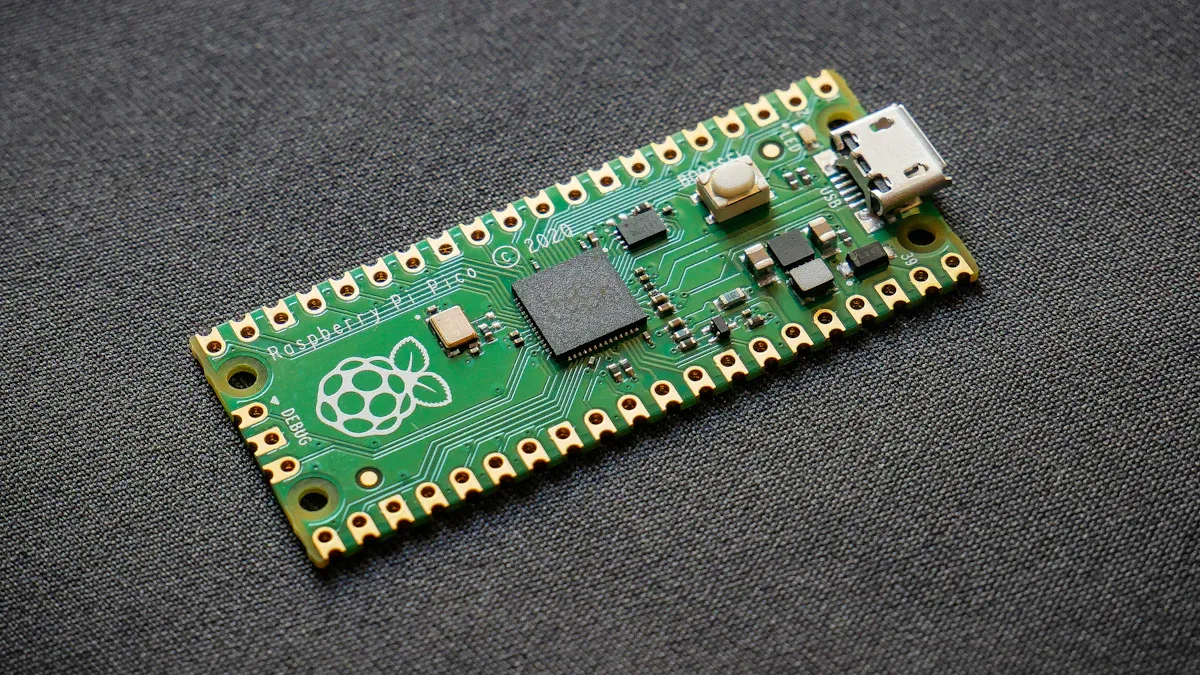
Clock Source Types
You can pick different clock sources for your microcontroller system. Each type has its good and bad points. Here are some common clock source types:
Clock Source Type | Description | Example |
|---|---|---|
Built-in sources that give less precise but good enough timing. | 8 MHz internal RC oscillator | |
External Crystals/Oscillators | Provide more precise and stable clock signals. | 16 MHz crystal oscillator |
Phase-Locked Loop (PLL) | Increases base clock speeds to get higher rates. | PLL generating 72 MHz from 8 MHz base clock |
High-Speed External (HSE) | External clock source for fast applications. | N/A |
High-Speed Internal (HSI) | Default system clock, cheap internal RC oscillator. | N/A |
Low-Speed Internal (LSI) | Low-power clock source, can work in low-power modes. | 32 kHz |
Low-Speed External (LSE) | External oscillator for slow applications. | N/A |
Clock Role
The clock circuit is very important for your microcontroller's timing. It decides how fast the processor runs instructions, which affects performance. Here are some key points about the clock's role:
The clock speed impacts how accurately data is sampled and sent, especially in analog-to-digital conversions.
In asynchronous communications, the clock signal tells when data is sampled, making sure timing is right in data transfer.
An unstable clock source can cause problems like clock drift and syncing issues. These can lead to communication errors and hurt system reliability.
Choosing the right clock source is very important for your microcontroller system. It helps your applications run smoothly and efficiently.
Boot Mode and Debugging Interface
Boot Mode Selection
Boot mode selection is very important for how your microcontroller starts. It decides which program runs when you turn on the device. Different microcontroller families have different boot modes. For example, the XMC™ 4000 family has eight boot modes. You can set these using boot pins or the STCON.SWCON register. NXP microcontrollers let you use a configurable bootloader over a serial connection. You can use source code or pre-programmed ROM/flash for this.
Here’s a quick look at how boot mode settings affect startup:
Start-up mode | |
|---|---|
1 | 1 |
1 | 0 |
0 | 1 |
0 | 0 |
Debugging Interface
A debugging interface is key for programming and fixing your microcontroller system. It gives access to debug modules. This lets you set hardware breakpoints and step through code. This helps you find and fix software bugs easily.
Common debugging interfaces include:
SWD (Serial Wire Debug)
JTAG
Keil MDK from ARM
Ulink2 and Ulink-pro debuggers
Segger J-Link
CMSIS-DAP devices
ST-Link
With these interfaces, you can stop or start execution. This is very important for debugging complex embedded systems. Having a debugging interface helps you create reliable applications and solve problems quickly.
In conclusion, a basic microcontroller system needs some key parts. These parts are the power supply, reset circuit, clock source, boot mode selection, and debugging interface. Each part is important for making sure your system works well. Knowing about these parts helps you create and fix your microcontroller projects better. By focusing on stability and how things work, you can prevent common errors and make your project more successful.
Keep in mind, a good microcontroller system can really boost performance and reliability in your electronic projects! ⚡
See Also
A Beginner's Guide To Microcontrollers And Flash Memory
Best 10 Microcontrollers For Embedded Applications In 2025
Exciting Features Of 32-bit ARM Cortex Microcontrollers