How to Choose the Right TMS320F28335PGFA Microcontroller for Your Project
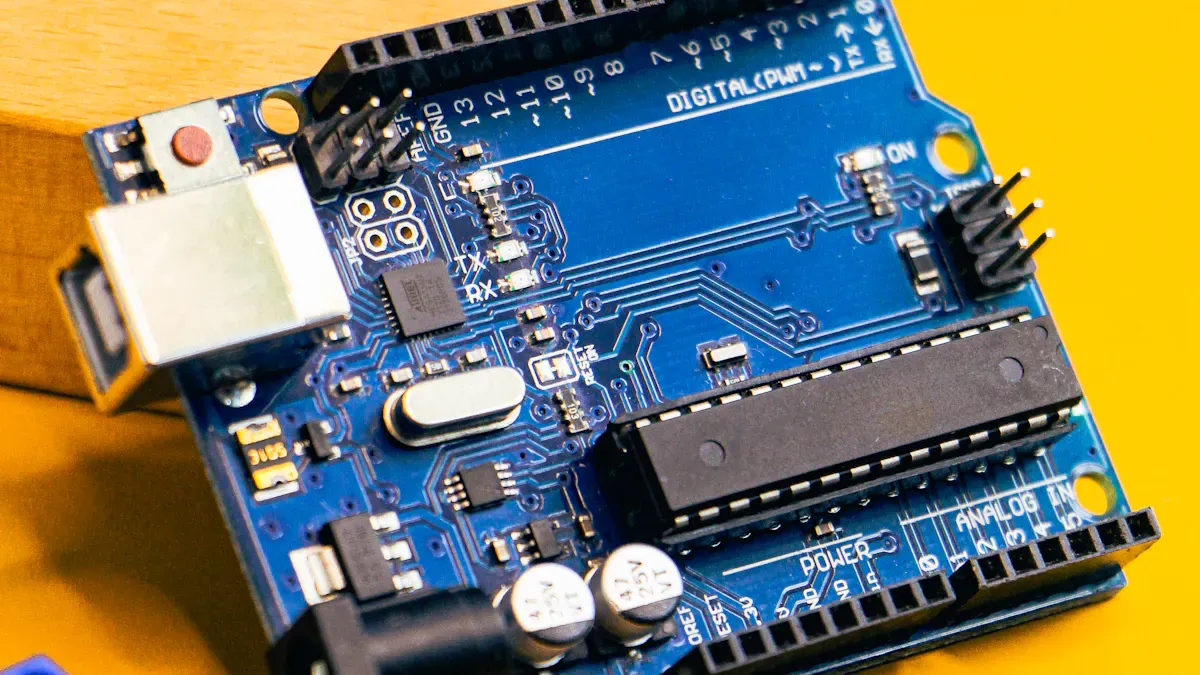
Selecting the right microcontroller, such as the TMS320F28335PGFA ic, is crucial for the success of your project. A well-chosen microcontroller ensures that your design meets performance requirements and operates efficiently. When evaluating options, consider key criteria such as core architecture, clock frequency, and memory size. These factors directly influence your project's capabilities. For example, the TMS320F28335PGFA ic offers excellent processing power, making it suitable for demanding applications. Understanding these elements will help you make an informed decision.
Key Takeaways
Clearly define your project goals to choose the right microcontroller that meets your specific needs.
Assess performance requirements like processing speed and memory to ensure the microcontroller can handle your application.
Understand the application context to select a microcontroller that performs reliably in your project's environment.
Utilize development tools like Code Composer Studio for efficient programming and debugging of your microcontroller.
Implement best practices such as effective memory management and code optimization to enhance your project's performance.
Project Requirements
Goals and Objectives
When starting your project, clearly define your goals and objectives. Ask yourself what you want to achieve. Are you developing a motor control system, a renewable energy application, or a medical device? Each of these applications has unique requirements. For instance, if your goal is to create a high-performance motor drive, you need a microcontroller that can handle precise control and real-time processing. The TMS320F28335PGFA ic excels in such scenarios, providing the necessary computational power to meet your objectives.
Performance Needs
Assessing your performance needs is crucial. Consider factors such as processing speed, memory requirements, and real-time capabilities. The TMS320F28335 microcontroller features a floating-point architecture, which is particularly effective for real-time processing needs. This capability allows for complex calculations essential in applications like overcurrent protection. For example, implementing a Numerical Relay using this microcontroller demonstrates its ability to handle real-time algorithms, such as the Short Time Fourier Transform (STFT). This enhances the accuracy of fault detection in power systems, ensuring your project meets its performance benchmarks.
Application Context
Understanding the application context is vital for selecting the right microcontroller. Different environments can significantly impact the reliability and performance of your system. The TMS320F28335PGFA microcontroller is designed for real-time control applications and is known for its stability in demanding environments. Here are some common application environments where this microcontroller shines:
Application Environment | Description |
|---|---|
High-Performance Motor Drives | Utilizes precise control for efficiency in DC and stepper motors, managing power electronic equipment. |
Renewable Energy Systems | Processes data for efficient energy conversion in solar and wind applications. |
Medical Devices | Supports data acquisition and control in diagnostic imaging and patient monitoring systems. |
Industrial Automation and Robotics | Ensures precise motion control in automated systems and robotics. |
By considering these factors, you can ensure that the TMS320F28335PGFA ic aligns with your project's specific needs and environmental conditions.
Key Features of TMS320F28335PGFA IC
Processing Power
The TMS320F28335PGFA ic boasts impressive processing capabilities. It features a C28x 32-bit core processor that operates at a maximum clock speed of 150 MHz. This high clock speed allows you to execute complex algorithms efficiently. The microcontroller excels in real-time processing, making it ideal for applications that require quick responses, such as motor control and digital signal processing.
Here’s a summary of its key processing specifications:
Feature | Specification |
|---|---|
Core Processor | C28x 32-bit |
Maximum Clock Speed | 150 MHz |
Program Memory | 512 KB Flash |
RAM | 34K x 16 |
Peripherals | DMA, PWM, Watchdog Timer |
Connectivity | CAN, I2C, McBSP, SCI, SPI, UART |
Data Converters | 16-channel 12-bit ADC |
Operating Temperature | -40°C to 85°C |
Package | 176-LQFP (24×24 mm) |
This powerful architecture allows you to handle demanding tasks with ease, ensuring your project runs smoothly.
Memory Specifications
Memory plays a crucial role in the performance of any microcontroller. The TMS320F28335PGFA ic offers a robust memory architecture that supports high-speed data processing. It includes:
Flash Memory: 512 KB
RAM: 68 KB
The microcontroller utilizes a Harvard bus architecture, which allows simultaneous access to instructions and data. This feature enhances processing speed significantly. Additionally, it includes six DMA channels that offload tasks from the CPU, optimizing data handling and processing efficiency. The architecture supports 32×32 MAC operations and a single-precision FPU, enabling rapid computation for complex algorithms.
GPIO and Peripherals
The TMS320F28335PGFA ic integrates a variety of GPIO pins and peripherals, enhancing its versatility for different applications. Here are some of the key features:
GPIO Pins: These pins provide flexibility for custom configurations, allowing you to connect with a wide range of external components.
Integrated Peripherals: The microcontroller includes:
ADCs
SPI
SCI
I2C
Enhanced PWM controllers
GTC
Ethernet
CAN
USB
These peripherals enhance the microcontroller's suitability for motor control applications. For instance, the high-resolution PWM enables precise motor control, while the ADC capabilities allow for accurate sensing and feedback. The communication interfaces support efficient data exchange, making the TMS320F28335PGFA ic a reliable choice for industrial applications.
Comparison with Other Microcontrollers
Advantages
The TMS320F28335PGFA ic stands out in its category due to several key advantages over other microcontrollers in the same price range. Here’s a comparison of its features:
Feature | TMS320F28335PGFA | Other Microcontrollers in Price Range |
|---|---|---|
CPU Core | TI’s advanced C28x CPU core | Varies |
32-bit single-precision FPU | Often absent or less capable | |
Clock Speed | Up to 150MHz | Typically lower |
Architecture | Harvard bus architecture | Varies |
MAC Operations | 32×32 MAC operations | Varies |
DMA Channels | Six | Fewer or none |
External Memory Access | 20-bit address bus, 2MB | Varies |
Application Suitability | High-performance motor drives | Limited suitability |
These features make the TMS320F28335PGFA ic a robust choice for applications requiring high performance and efficiency.
Use Cases
The TMS320F28335PGFA ic finds its niche in various industrial applications. Here are some common use cases:
Motor Control: This includes Brushless DC (BLDC) motors, Permanent Magnet Synchronous Motors (PMSM), and Induction Motors for variable frequency drives.
Power Conversion: It excels in inverters (solar, UPS), DC-DC converters, and AC-DC converters.
Energy Management: The microcontroller supports smart grids and battery management systems.
Industrial Automation: It is ideal for PLCs (Programmable Logic Controllers), motion control systems for robotics, and sensor fusion for improved accuracy and reliability.
In renewable energy systems, the TMS320F28335PGFA ic plays a crucial role. For instance, in solar power applications, it processes real-time data for optimal panel orientation and maximum power point tracking (MPPT), which increases energy yield. In wind energy, it dynamically controls turbine blades to optimize performance under varying wind conditions.
Development Tools for TMS320F28335PGFA IC
Programming Tools
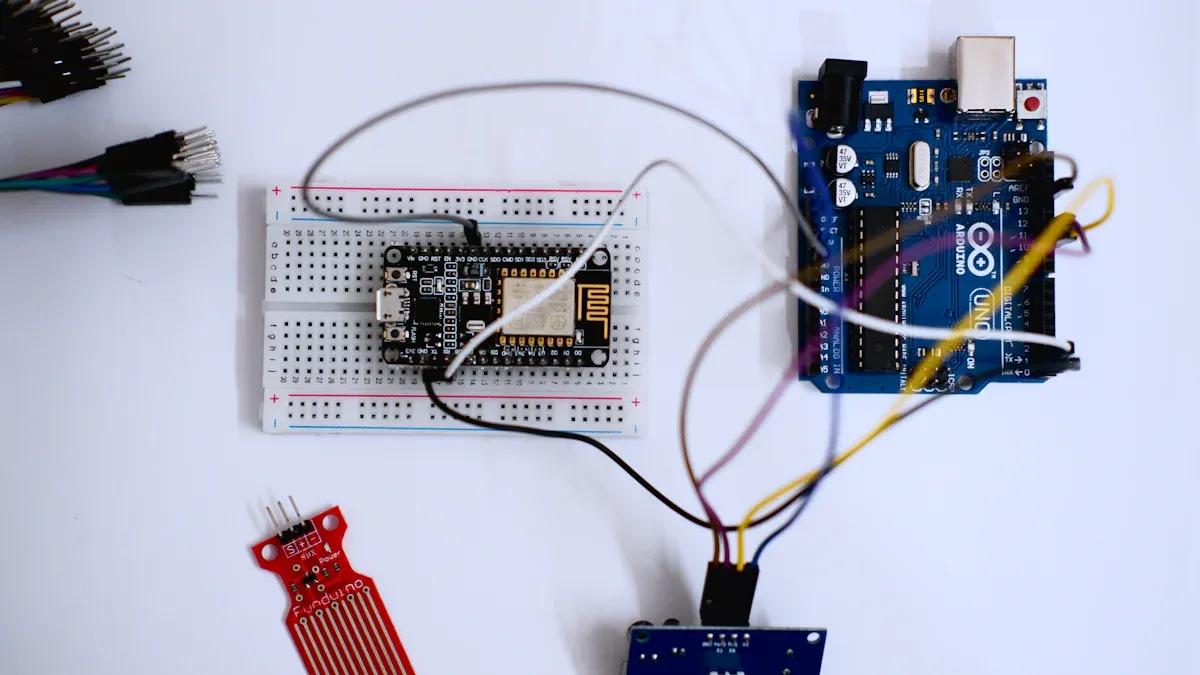
When working with the TMS320F28335PGFA ic, you have access to several powerful programming environments. These tools support various programming languages, making it easier for you to develop applications tailored to your project needs. Here’s a summary of the primary programming environments available:
Programming Environment | Supported Languages |
|---|---|
Assembly, C, C++ | |
Assembly, C, C++ |
Both Code Composer Studio and TrueStudio provide robust features for coding, debugging, and optimizing your applications. They come equipped with helpful libraries and example codes, which can significantly speed up your development process.
Debugging Resources
Debugging is a critical part of the development process. For the TMS320F28335PGFA ic, you can utilize several integrated development environments (IDEs) that facilitate effective debugging. Here are some notable resources:
TrueStudio
Code Composer Studio
These IDEs not only help you identify and fix issues in your code but also offer optimization tools to enhance performance. They provide a user-friendly interface that simplifies the debugging process, allowing you to focus on refining your application.
Additionally, the developer community surrounding the TMS320F28335PGFA ic is active and supportive. Here’s a snapshot of community engagement:
Metric | Value |
|---|---|
Replies | 7 |
Subscribers | 81 |
Views | 873 |
Status | Locked |
This community can be a valuable resource for troubleshooting and sharing insights, ensuring you have the support you need throughout your development journey.
Best Practices for Implementation
Integration Tips
When integrating the TMS320F28335PGFA microcontroller into your project, follow these tips to ensure a smooth process:
Understand the Pin Configuration: Familiarize yourself with the pin layout and functions. This knowledge helps you connect peripherals correctly.
Use Reference Designs: Leverage existing reference designs from Texas Instruments. These designs can guide your implementation and save time.
Plan for Power Supply: Ensure that your power supply meets the microcontroller's requirements. A stable power source is crucial for reliable operation.
Testing and Validation
Testing and validation are essential to confirm that your implementation works as intended. One effective method involves using the eCAP module on the TMS320F28335 microcontroller. You can create a simplified test program that continuously buffers data from the eCAP module's registers. After each capture, an interrupt service routine (ISR) processes the data by accumulating 1000 values and printing their average on the 1000th call. This approach serves as a frequency counter, measuring the input signal period. Conduct tests with various configurations, including rising and falling edge captures, delta and absolute timing, and all input qualification options. This practical example highlights a method for validating signal capture and timing functionality.
Optimization Strategies
To maximize the performance of the TMS320F28335PGFA microcontroller, consider the following optimization techniques:
Familiarize with Hardware: Understanding the hardware and instruction set allows for effective programming.
Utilize Development Tools: Use tools like TrueStudio and Code Composer Studio for easier coding and debugging.
Manage Internal Memory: Effective memory management ensures fast and predictable responses in real-time applications.
Optimize Instruction Sets: Tailor logical, arithmetic, and data transfer instructions to the hardware for better performance.
Focus on Code Efficiency: Writing efficient control algorithms in C or assembly can lead to improved efficiency and reduced power consumption.
By implementing these best practices, you can enhance the reliability and performance of your projects using the TMS320F28335PGFA microcontroller.
Choosing the right microcontroller, like the TMS320F28335PGFA, is essential for your project's success. You must align your selection with specific project needs. Consider the following key points:
Define your project goals clearly.
Assess your performance requirements.
Understand the application context.
Utilize resources such as closed-loop control systems for enhanced dynamic performance and efficient real-time algorithms to optimize your implementation. Remember, custom function development can improve execution speed and efficiency. By focusing on these aspects, you can ensure a successful project outcome.
FAQ
What makes the TMS320F28335PGFA suitable for motor control applications?
You get a 150 MHz C28x core with high-resolution PWM and multiple ADC channels. These features allow precise real-time control and accurate feedback, essential for efficient motor drives.
Can I program the TMS320F28335PGFA using C or C++?
Yes, you can use Code Composer Studio or TrueStudio to program in C, C++, or assembly. These environments provide debugging and optimization tools to streamline your development.
How does the floating-point unit (FPU) benefit my project?
The 32-bit single-precision FPU accelerates complex math operations. This improves real-time processing speed and accuracy, especially in control algorithms and signal processing tasks.
What development tools support debugging for this microcontroller?
Code Composer Studio and TrueStudio offer integrated debugging features. They help you identify issues quickly and optimize your code for better performance.
Is the TMS320F28335PGFA reliable in harsh environments?
Yes, it operates from -40°C to 85°C and supports industrial applications. Its robust design ensures stable performance under demanding conditions.
See Also
Selecting The Ideal Low-Power Microcontroller For Your Project
Finding The Perfect SOT23-6 Buck Regulator Chip For You
Exploring The Features Of High-Performance Microcontroller ICs
Grasping The Fundamentals Of Microcontrollers And Flash Memory